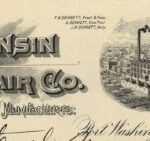
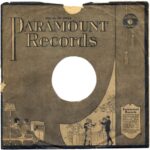
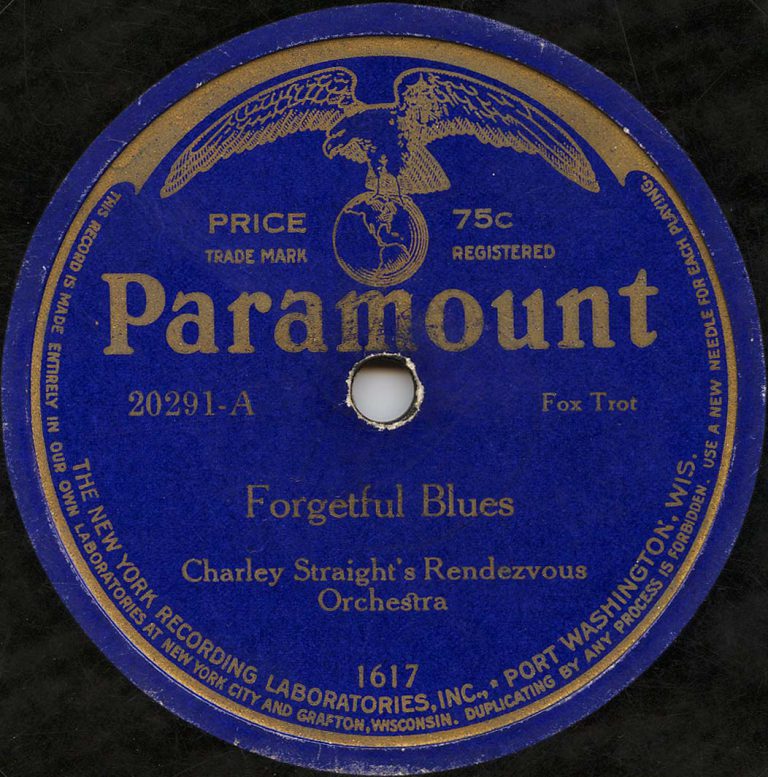
Created by the management of the Wisconsin Chair Company, a furniture making business based in Port Washington, Wisconsin, Paramount Records was initially incorporated to help sell phonograph cabinets in the late 1910s. Relying on resourceful talent recruiters and a relatively cheap production process, Paramount Records became one of the leading blues music record producers in the 1920s, and is today recognized by historians of music for their recordings of Ma Rainy, Louis Armstrong, and Blind Lemon Jefferson.
Take a listen:
Ma Rainy, “Explainin’ the Blues,” (1925)
Ma Rainy and Lovie Austin and her Blues Serenaders, “Last Minute Blues,” (1923)
Written by Sergio González, February 2014.
Want to learn more about Paramount Records?
Created by the management of Port Washington’s Wisconsin Chair Company, a furniture making business, Paramount Records was initially incorporated to help sell phonographic cabinets in the late 1910s. Relying on resourceful talent recruiters and a relatively cheap production process, Paramount Records became one of the leading blues music record producers in the 1920s.
Click on the video title (at left) to open in YouTube.

This object has been featured on WPR's Wisconsin Life!
Produced for Wisconsin Life by Erika Janik and Sergio González
An old 78 record spins a tune about Port Washington’s Paramount Records, one of the leading blues music production studios of the 1920s.
Listen below to the segment from Wisconsin Public Radio’s Wisconsin Life.
Erika Janik:
To sell its phonographic cabinets, a Grafton furniture business decided to start a record label. It became one of the leading producers of blues records in the 1920s and made pioneering recordings of some of the nation’s great musicians. Sergio Gonzalez tells us the story of Paramount Records as part of Wisconsin 101.
Sergio González:
The first time we heard about this was because Jack White’s production company had just put out this huge collection of Paramount Records. And so the first thing I heard was not the blues music, it was some of this quote, unquote, ethnic music of Southern and Eastern European. The first time I heard I was like, “This is not good. What is this like? Why would people listen to this?” You know, it didn’t sound like anything special or particular. And it wasn’t until you get to the blues that you really understood what made Paramount special.
It was strictly a money making project. So the Wisconsin Chair Company was founded in the 1880s and they were really successful in Port Washington, creating things like beds and cabinets. But with the introduction of phonographs in the late 19th and early 20th century, they decided to jump into that business. And they were making phonographic cabinets for corporations like the Edison company. And they got to thinking, well, if we’re making these phonographic cabinets, why don’t we just start making some music as well. So they had purchased two different subsidiaries that had kind of ventured into the blues market, so Puritan records and the New York Recording Laboratories. And really the thing that pushed them into the blues market was the hiring of J. Mayo Williams. He was a guy who was living in Chicago, and he had actually contacted this company and asked if he could be a talent recruiter for them. And he had a very special talent of finding unknown artists in the south and then bringing up to Chicago, and eventually all the way up to Wisconsin to record music. So, some of the big recorders you had Louis Armstrong, Jelly Roll Morton, Ethel Waters, and Ma Rainey, but the big find for J. Mayo Williams is Blind Lemon Jefferson.
The Grafton plant was made specifically to make cheap music. Artists would come all the way up from the south, stop in Grafton, and then, because of the sundown laws in Grafton, would have to leave the city as African-American artists and head back to Milwaukee to find a place to stay.
Paramount blew up in the 1920s up until basically the Great Depression, where the entire music industry collapsed. At its height, the Wisconsin Chair Company employed 1/6 of all workers in Ozaukee County, and so they were a touchstone organization within the community. And so I would imagine a lot of people understood that company kind of being instrumental to their family’s well being.
Like a lot of companies, Paramount Records, did not treat their talent with a lot of respect, and specifically, their Black artists, they were paid considerably less than the rest of their artists on their slates, and so records show that 9 out of 10 Paramount recording artists never received any royalties from their music, and a lot of them were swindled out of the copyrights on their songs. And so they would write these fantastic songs, and Paramount would hold the rights to them, and the artists would never see really any profit off of that.
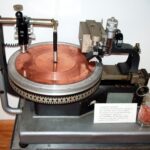
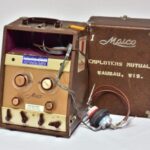
Paramount Records to this day are really hard to find because they were produced on these cheap wax masters that were made for immediate production, but not made to last very long. And so people who purchased Paramount Records knew that they were going to get great music, but not very good quality.
I think the amazing story about Paramount is that we’re talking about one of the most important companies in the creation of blues music in the 1920s and early 1930s and it was based here in Wisconsin, in a place that people wouldn’t even think about.
Erika Janik:
Wisconsin Life is a co-production of Wisconsin Public Radio and Wisconsin Public Television in partnership with the Wisconsin Humanities Council. Additional support comes from Lowell and Mary Peterson of Appleton. Find more Wisconsin Life on our website, wisconsinlife.org and on Facebook. I’m Erika Janik.
[Blues music plays]

Mills Music Library
This object is part of the Mills Music Library at the University of Wisconsin-Madison. Research for this object essay and its related stories was supported by the library.