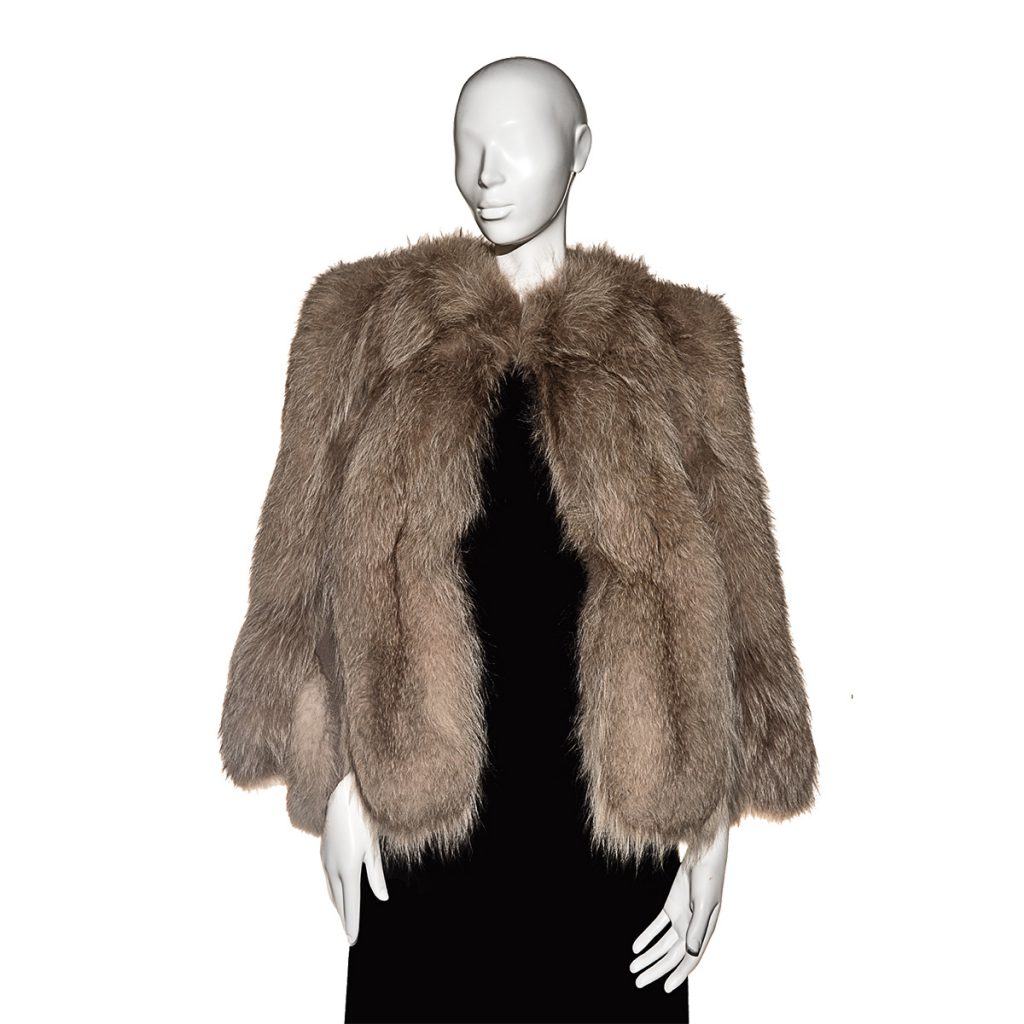
This coat was made from the fur of foxes raised on the Fromm Fur Farm in Hamburg, Wisconsin. The jacket is covered in light-silver fox fur and lined with a taupe fabric. Straps allow the coat to also be worn as a cape.
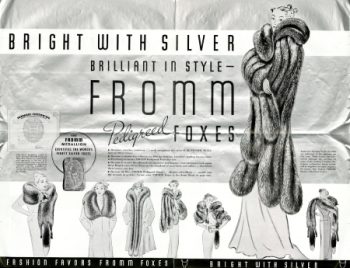
In the early decades of the 20th century, it was fashionable to use fox fur on everything from scarfs, capes, and coats to trim for suits and gowns. Anticipating a shift in tastes toward lighter colored furs, the Fromm Brothers’ silver foxes were, for a time, the most prized fur available. Growing rapidly in the 1920s and 1930s, the Fromm Brothers fox farm upended buying practices in the fur industry and played a major role in the development of the canine distemper vaccine.
Written by Ben Clark, January 2017.

Research for this object and its related stories was supported by the Marathon County Historical Society in Wausau, Wisconsin.
Produced for Wisconsin Life by Erika Janik and Ben Clark
Five brothers from Hamburg, Wisconsin, built a fox-fur empire that transformed the fur industry and played a major role in the development of a canine distemper vaccine.
Listen below to the segment from Wisconsin Public Radio’s Wisconsin Life.
Erika Janik:
Before I moved to Wisconsin, my grandma offered me her silver fox fur coat for Midwest winters. I declined, but I’ve been regretting my decision ever since I talked to Ben Clark from the Marathon County Historical Society about the Fromm brothers and their world famous silver furs.
Ben Clark:
When you say fur trade, people think of the Beaver and the people coming down the river and canoes to trade with the Native Americans and the that’s why we have places like Green Bay and La Crosse, you know, they were trading posts that then grew into cities. And this is an entirely, it’s a related but it’s completely separate fur trade. So the one we went with, it’s a fur coat made out of silver fox fur, probably produced in the early ’40s, and this was after 1934 the height of fashion in the United States.
The Fromm brothers themselves, their mother was, her maiden name was Nieman, and when he she married Frederick Fromm, a dairy farmer in the area, her parents gave her a tract of land in Hamburg, Wisconsin, and that became the Fromm farm. Frederick and Alwina Fromm ended up having nine children, and it’s the youngest four sons that then kind of take over the Fromm farm. And they became kind of interested in fox fur, because a good fox fur could, you know, you could sell it for a couple dollars and help support your family.
The red fox is is actually the same species as the silver fox. So you can actually breed the foxes to create certain characteristics, primarily as the color. If you can produce that quality of pelt that could that color of fur on a farm, well, then you’d be set. So the Fromm brothers heard about this, and they kind of decided, well, this is what we want to do with our lives. So they were experimenting with Fox farming in the first decade of the 20th century. One of their goals was to just grow as many foxes as possible. The Silver Fox was not particularly popular, but you know, as time goes on, as the market did switch in 1934 they were sitting on the largest supply of silver foxes in the world. Everybody wanted the silver. And everybody who had been breeding for years towards the other direction, were now scrambling, and it would take years for them to get, you know, eliminate that dark color and get back to what the Fromms were doing.
So they had a period where they were, you know, they had a lot of influence in the industry, and they kind of considered it and thought, you know, what should we do about this? And one of the things they didn’t like was the auction system. So they decided, you know, why don’t we just hold our own auction? Everybody wants our pelts and well, just see what happens. And so they put out a call. They invited all of these fur buyers from across the country. So many people came from the New York area that they chartered a train, specifically from Central Station to Wausau. It lasted until 1939. This is kind of when they start getting into making fur coats themselves. By this point, the Fromms weren’t completely, you know, they didn’t have a monopoly anymore. There was competition, and the prices that they were going for were just not even rock bottom. They were just like, not at all what they were worth.
Well, I think it’s interesting, because I think when we talk about Wisconsin, obviously agriculture, farming is a huge part of the demographics and the history of our state, and I think they represent an interesting aspect in that they’re not dairy farmers. And so I think it’s interesting because the Fromms represent an aspect of that part of our economy, a part of our culture that, you know, we don’t often get to see.
Erika Janik:
This story is part of Wisconsin 101, a collaborative effort to share Wisconsin’s story in objects. Wisconsin Life is a co-production of Wisconsin Public Radio and Wisconsin Public Television, in partnership with the Wisconsin Humanities Council. Additional support comes from Lowell and Mary Peterson of Appleton. Find more Wisconsin Life on our website, wisconsinlife.org and on Facebook. I’m Erika Janik.
RELATED STORIES
Canine Distemper and the Fromm Vaccine
Fashion and Fur

The Fromm Brand and the Hamburg Fur Auction