Founded in 1888 by Frederick A. Dennett, the Wisconsin Chair Company (WCC) was perhaps the most important business in Ozaukee County at the end of the nineteenth and beginning of the twentieth century. The company, located along the northern shore of the harbor in Port Washington, was originally created to manufacture and sell chairs and other home furnishings. Throughout its over fifty-year history, however, the WCC would go on to produce a multitude of products, including beds, cabinets, and even phonograph cabinets.

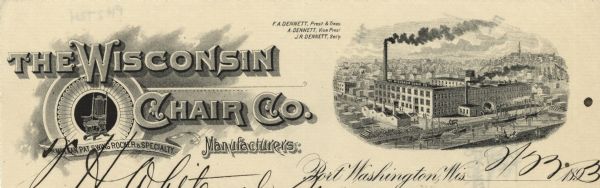
Memohead of the Wisconsin Chair Company of Port Washington, Wisconsin, with its McLean patented swing rocking chair set against a circular background with two decorative borders and an elevated view of the factory, surrounding streets, and boats on the water alongside the building.
Memohead of the Wisconsin Chair Company of Port Washington. Image from the Wisconsin Historical Society, #91287.

The city of Port Washington greatly benefited from the expansion of the WCC. The city’s population more than doubled from 1888 to 1898, leading other companies such as the Gilson Manufacturing Company to incorporate in the city. By the end of the nineteenth century, the WCC was the largest Port Washington employer, and was one of the fastest growing businesses in Wisconsin. At its height, the company employed one-sixth of all workers in Ozaukee County.

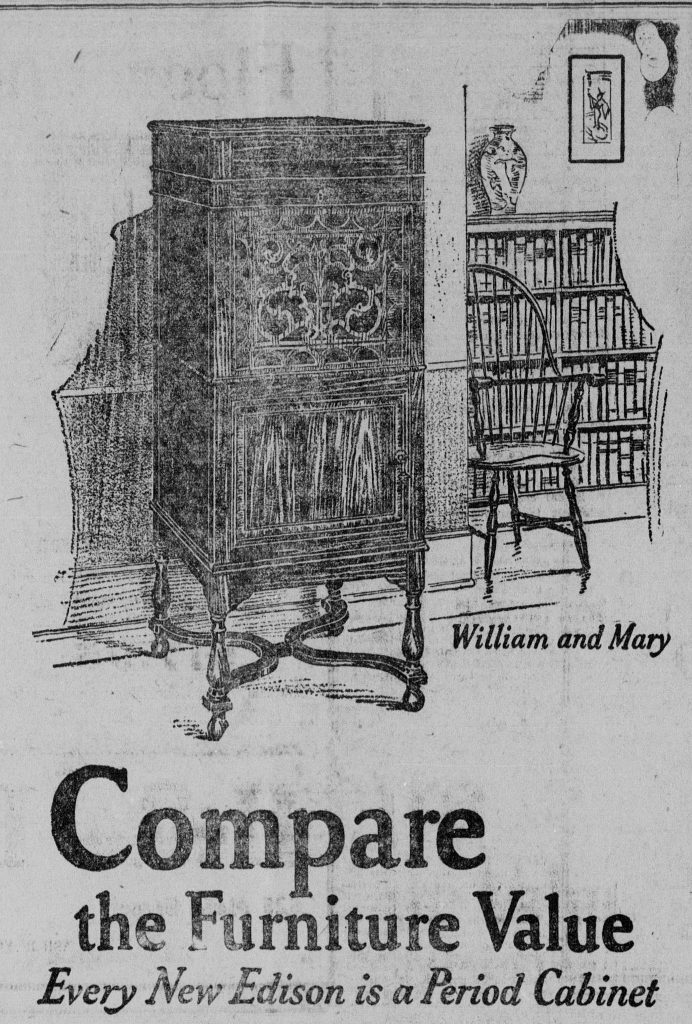
Advertisement for a Edison phonograph cabinet, featuring a drawing of a William and Mary style cabinet and the text, "Compare the Furniture Value, Every New Edison is a Period Cabinet."
1921 Advertisement for an Edison phonograph cabinet. Image from the Library of Congress.

Disaster

Disaster nearly derailed the WCC’s rapid growth in 1899. In February 1899, a fire broke out in the veneering department of the company’s main building. Port Washington firefighters, afraid that the fire might engulf the entire city, called upon the Milwaukee and Sheboygan fire departments for assistance. The flames spread quickly, destroying the entire complex and the adjoining lumberyard.

Despite the traumatic destruction caused by the fire, Dennett and the WCC board of directors rebuilt the company quickly. With help from the city, the WCC constructed a larger building with better access to the railroad lines that ran through the city. In 1915, the company incorporated another furniture subsidiary, the Wisconsin Couch Company, which sold couches and folding beds.

A New Business

In 1916, the WCC entered the burgeoning field of recorded sound with their subsidiary, the Wisconsin Cabinet and Panel Company (WCPC). Working with Edison Records, the New Jersey-based company responsible for beginning the commercial record industry, the WCPC began producing phonograph cabinets in a building in nearby New London, WI. With the phonograph market growing, the WCC redirected the efforts of the Wisconsin Couch Company towards producing more phonograph cabinets, renaming it the United Phonographs Corporation in 1916.

Management for the United Phonographs Corporation decided to begin pressing and selling records to accompany their phonographs soon after. In 1917, the WCC incorporated two subsidiaries, Puritan Records and the New York Recording Laboratories, which became the predecessors of Paramount Records.

Written by Sergio M. González, February 2014.

SOURCES

Sarah Filzen, “The Rise and Fall of Paramount Records.” The Wisconsin Magazine of History 82:2 (Winter, 1998-1999): 104-127.

Edward Komara, “Blues in the Round.” Black Music Research Journal 17:1 (Spring, 1997): 3-36.

Robert Springer, “Commercialism and Exploitation.” Popular Music 26:1 (Jan. 2007): 33-45.

Alex Van der Tuuk, Paramount’s Rise and Fall. Denver: Mainspring Press, 2003.

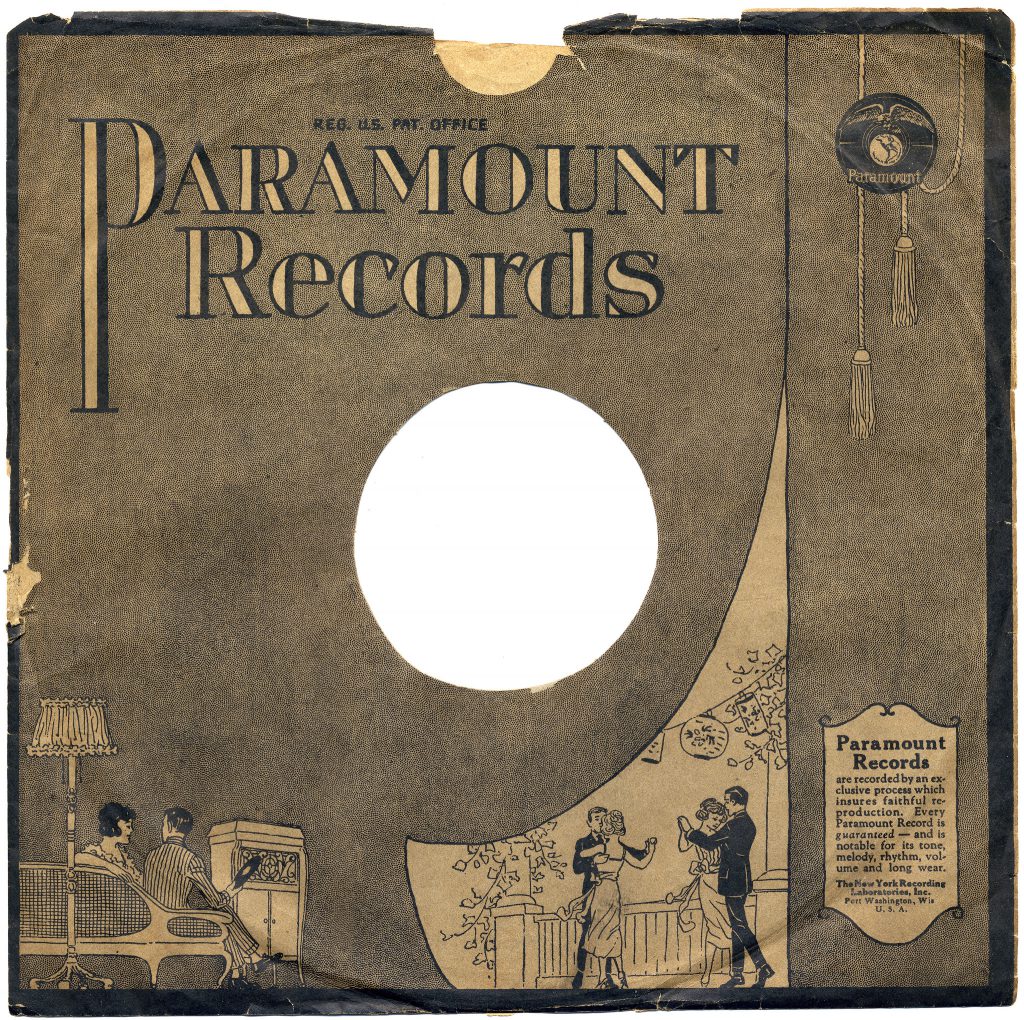
A paper record sleeve from the 1920s. This features the company name "Paramount Records" in large print, and illustrations of a man and woman sitting on a sofa next to a phonograph cabinet with a record in hand, and another illustration of two couples dancing on a patio.
A Paramount record sleeve from the 1920s, which includes the illustration of a phonograph cabinet in the lower left corner. Photograph by William Creswell, via Flickr.