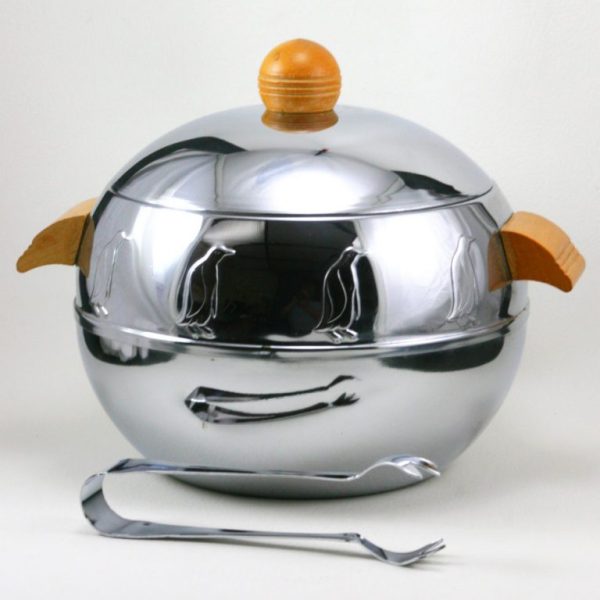
Produced in West Bend, Wisconsin, in the 1940s, the Penguin Hot and Cold Server is an iconic object of postwar American culture. Designed to insulate both hot and cold foods, and to keep ice cubes chilled, the Penguin highlights the resurgence in home entertainment after the war, including popular leisure activities like outdoor grilling and cocktail parties.
It also offers a prime example of industrial design, changing technologies, the shifting role of women in the workforce, and the rise of a postwar consumer-driven society.
Lastly, the Penguin is a reminder of Wisconsin’s former position as the center of the aluminum cookware industry.
In 1941, inventor Ralph N. Kircher drew up the plans for the West Bend Penguin Hot and Cold Server. Taking the form of a sphere with a flattened base, the vessel’s central decorative band depicts a colony of penguins, one waddling behind the other. The shiny and reflective surface of the server (available in chrome or copper-plated steel) creates a contrast between the cover’s knob and the vessel’s handles, the latter mimicking the curvature of a penguin’s flippers.
Written by Ann Glasscock, August 2014.

READERS RESPOND
“We collect these Penguins and give them out like Trophies. We use ours strictly for Ice Cubes when we refill our Cocktails. I was surprised to see how much thought went into the actual blueprint for The Penguin. Ralph N. Kircher is a Genius.” −Clifford Lueck

This object has been featured on WPR's Wisconsin Life!
Produced for Wisconsin Life by Erika Janik
A penguin-themed serving bowl dishes out stories about the aluminum industry, postwar consumer culture, and home entertainment in mid-twentieth century Wisconsin.
Listen below to the segment on Wisconsin Public Radio’s Wisconsin Life:
Erika Janik: The Penguin hot-and-cold server was an essential cocktail party piece in the late 1940s and 50s. As part of our continuing look at the objects that tell Wisconsin’s story, Ann Glassock tells us about the penguin server and its place on Wisconsin’s tables.
Ann Glasscock: This is the penguin hot-and-cold server made by the West Bend Company, and it is a spherical object, and there’s a decorative band around the center. It depicts a colony of penguins, one waddling behind the other, and the handles actually mimic a penguin’s flippers. There’s a booklet that comes with the penguin, and it depicts the penguin full of spaghetti and meatballs, which is not what you’d expect, but it also depicts the penguin with, you know, fruit salad or ice cubes, so that’s its second function.
So I used to work at an auction house that specialized in mid-century modern sales at least once or twice a year. And so this object would pop up every now and then. And so it sort of became ingrained in my memory. I had no idea it was made in Wisconsin. So in 1911, the West Bend Aluminum Company was founded by Carl Ziegler and a group of other businessmen. And it started off somewhat slow, but it really sort of gained momentum following World War One, and they started producing more and more cookware products such as the the waterless cooker, became really popular, and the company just continued to grow. But during World War Two, it did have to stop production, because aluminum was a priority material. And so during World War Two, the company got a naval contract, and they produced cartridges. After the war was over, they picked up where they left off and started to make cookware and home appliances, and the penguin was really popular for new modern families that were entertaining, gifts for brides that were getting married, so they were really capitalizing on this new consumer demand.
Period Advertisement: This is one party that just has to turn out right. Well, the purpose of a party is to have fun together, and a successful party needs planning and skill.
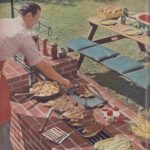
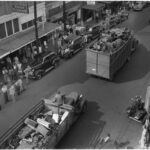
Ann Glasscock: With all of the cars now filling the streets and the noise and the fumes, people started moving entertainment from the front of the house, where porches normally were found, to the backyard. The whole outdoor grilling, backyard barbecue, sort of phenomenon that’s happening in the 1950s.
Period Advertisement: Then at just the right moment. Is anybody hungry? Everything’s ready. Is anybody hungry!? Well, a little snack certainly is pleasant about this time of evening.
Ann Glasscock: You still, you see a lot of these objects today, so it makes me think that the penguin were pretty popular. You know, one person sees the object posted on a website, and then it gets people talking about, oh, I had this object, or my grandmother had this object. And so the fact that all these people are coming out and saying, you know, this reminds me of something. Makes me think that they were pretty popular.
Erika Janik: That story was part of Wisconsin 101, a collaborative project to share our state’s story and objects. Wisconsin Life is a co-production of Wisconsin Public Radio and Wisconsin Public Television in partnership with the Wisconsin Humanities Council. Additional support comes from Lowell and Mary Peterson of Appleton. Find more Wisconsin life on our website, wisconsinlife.org and on Facebook. I’m Erika Janik.

Washington County Historical Society
This object is part of the Washington County Historical Society Collection. Research for this object essay and its related stories was supported by the Washington County Historical Society in West Bend, Wisconsin.