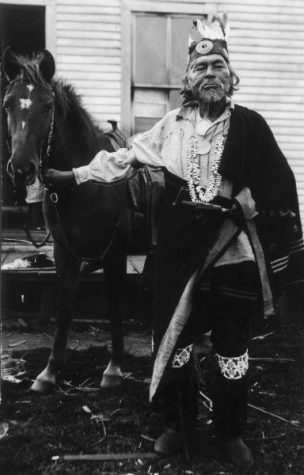
Born May 18, 1851 at Black Earth (Ma-ka-ta-we-ga-me-cok, a Potawatomi village in southern Kewaunee County) Chief Simon Onanguisse Kahquados (often remembered as “Chief Simon”) was the last hereditary descendant in a long line of Potawatomi chiefs, his family being one of the oldest known Potawatomi inhabitants of Wisconsin. Chief Simon’s father was Nen Gah Sum (Shimmering Light), who died when Simon was just five years old. His grandfather was Keetoos (Day Walking), the leader and speaker at Black Earth, the last Potawatomi village in the Kewaunee-Manitowoc area. Chief Simon was also the descendent of Chief Onanguisse (The Shimmering Light of the Sun), who in 1679 was said to have saved French explorer Robert Sieur La Salle’s life when he found him starving in the forests of Rock Island in the Upper Great Lakes.

In 1862, more than 1,000 people (Potawatomi, Ottawa, and Ojibwe) were forced to leave the village at Black Earth, and from here they split up into small groups. Simon admired his grandfather’s peaceful attitude when dealing with white settlers, “Those that do not listen, will die; do not quarrel or scold one another, we much not hate each other, we must love all the world.”

At thirteen, Simon’s band moved to Michigan’s Upper Peninsula, at Cedar River; and at 19 (in 1870) he bought a homestead near Bark River. Not too much is known of his life between 1870 and 1907, but in 1917 he wrote of this time: “…we take up public Government Homestead Lands, we are about 30 Families together…Wis. Potawatomi Indians reside also on private lands, have log houses and a Methodist Church and school. The lands are cultivated by them. I was live to Hannaville, Methodist Indian Mission over 30 years. I was in cruising [a timber cruiser] in Mich. 30 years. Everybody know those Big Lumber Co. to Mich. and Wis. −my occupation cruiser.”

Simon’s first appearance on government record came in 1907. At this time, an enrollment agent from Washington, D.C. came to enroll all the Wisconsin Potawatomi who, until this time, hadn’t received government aid because they had not migrated West of the Mississippi. The Forest County Potawatomi reservation was established in 1913, and around that time Simon moved there, settling near the headwaters of the Peshtigo River. 

An engaging speaker, and having taught himself to write English, Kahquados often served as an interpreter and provided a wealth of information to the Wisconsin Historical Society regarding traditional Potawatomi culture, language, ancestry, history, and the sad living conditions of his people at that time. He also frequently requested information about land rights and humbly requesting assistance for his people. Most of Simon’s letters to Charles E. Brown of the Historical Society were sent from either Camp 8 or Bird Center, Wausaukee–both places belonging to the J.W. Wells Lumber Company where Simon worked.

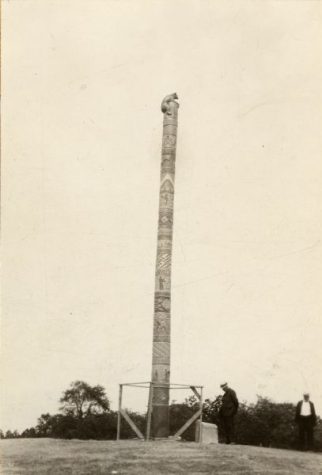
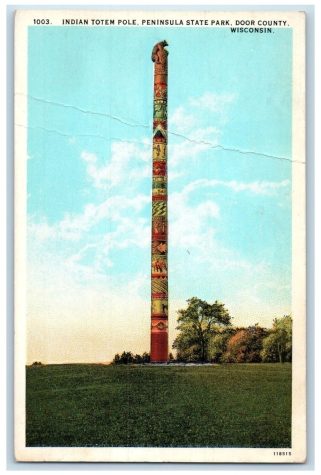
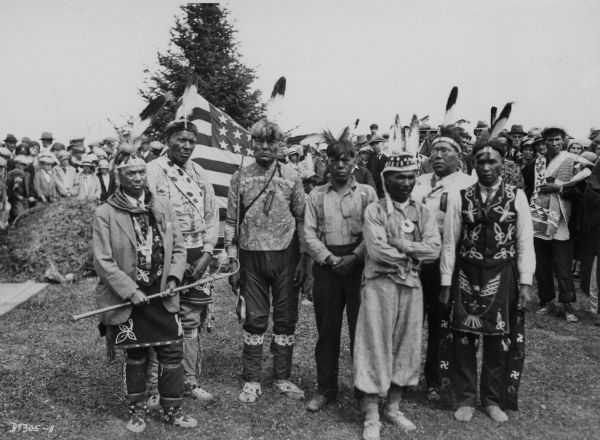
In 1927, a totem pole honoring the Potawatomi as the early inhabitants of Door County was dedicated in Peninsula State Park. Chief Kahquados (who, at the time, many white people regarded as the “Last Hereditary Chief of the Potawatomi”) presided over the two-day long event which included ceremonial singing, dancing, a bonfire, and athletic events.

In his later years, Simon moved to Blackwell. After an extended illness, he died on Thanksgiving Day 1930 at the age of 79 at the home of William Tahwa near Wabeno. Sadly, while he counted many influential people among his friends and acquaintances, he spent his final days in poverty, subsisting on a mere $10 per month government allowance. His death was reported throughout the state, and the headline, “Last Chief of Potawatomis Dies in Rags” appeared on the front page of the Wisconsin State Journal.
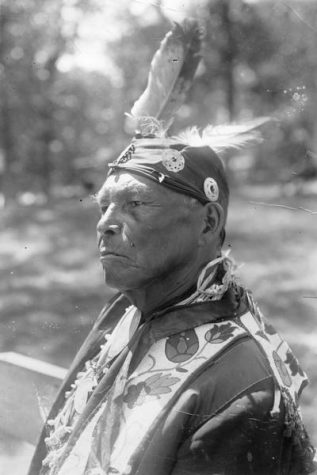
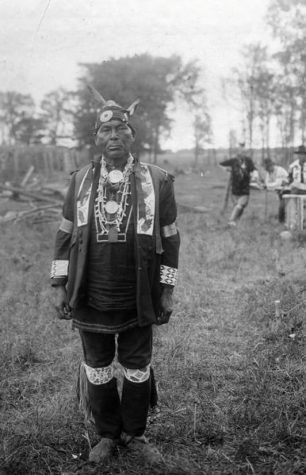
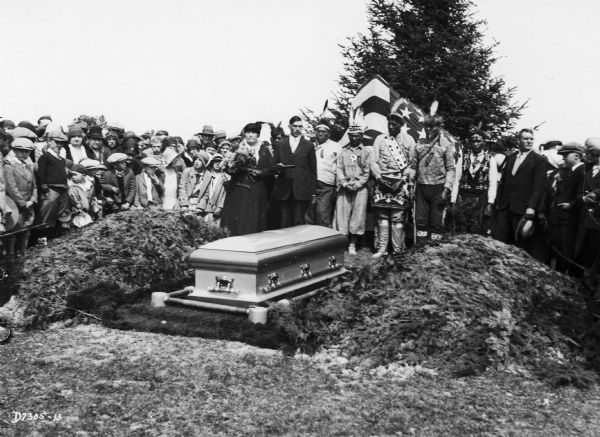
Prior to his death, Simon had requested to be buried near his ancestors in Peninsula State Park near Whitefish Bay in Door County. Charles E. Broughton, a curator for the Wisconsin Historical Society and editor of Sheboygan Press was given the charge of arranging for Simon’s burial. To honor Simon’s final wishes, the Wisconsin Conservation Commission granted special permission for the burial and, through coordination with the Door County Historical Society, Kahquados was interred near the totem pole in Peninsula State Park that he had helped erect a few years earlier. (The pole was removed because of deterioration in 2022.)

An estimated 15,000 people attended the burial of Chief Kahquados, which was held on Memorial Day in 1931. The burial had been delayed allowing time for the planning of the elaborate funeral, as well as due to weather concerns. A boulder stands as his grave-marker with the following inscription: “This Stone Marks the grave of Simon Onanguisse Kahquados Head Chief of the Potawatomi Indians. He was the last descendant of a line of Chiefs who ruled over the Door County Peninsula for many centuries he was born May 18, 1851 and died Nov. 27, 1930. A true and worthy Indian.”

This story was edited and adapted from Diana Zlatanovski’s original Curators’ Favorites article. 

SOURCES

“In Honor of Chief Simon,” Gsenyaniyêk ėzhëwébêk (Potawatomi Times). 1 June 2004, updated 1 May 2024, Vol. 29(21), 1.

Wisconsin Local History & Biography Articles, Wisconsin Historical Society.