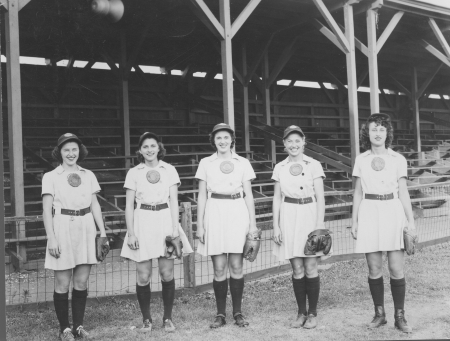
Gender Norms and The All-American Girls’ Professional Baseball League

Philip Wrigley, the gum manufacturer and owner of the Chicago Cubs, conceived of the All-American Girls' Softball League in 1942 as World War II and its drain on manpower threatened to shut down Major League Baseball. Wrigley's ideas about gender norms helped shape the league, from its strict rules to its uniform policies.

Read More
Comments Off on Gender Norms and The All-American Girls’ Professional Baseball League

Missionaries and Land Rights: The Story of Erik Morstad and the Potawatomi

Some histories are not as straightforward as others, especially when cultures collide. It may come as no surprise that stories about the interactions between Native Americans and white settlers are sometimes one-sided. We can partly attribute this to the European tradition of…

Read More
Comments Off on Missionaries and Land Rights: The Story of Erik Morstad and the Potawatomi

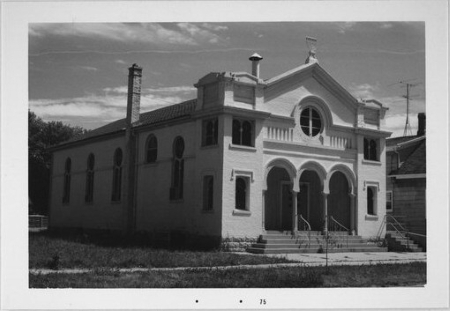
The Growth of Sheboygan’s Jewish Community

Although Sheboygan and Milwaukee are only 55 minutes apart by car today, the two cities on the west coast of Lake Michigan remained largely separate in 1900 when they both competed to become the industrial capital of Wisconsin. Through the latter half of the 19th century and the first half of the 20th century, the industrialization process in both cities was shaped by an increase in Jewish immigration to the region. 

Read More
Comments Off on The Growth of Sheboygan’s Jewish Community

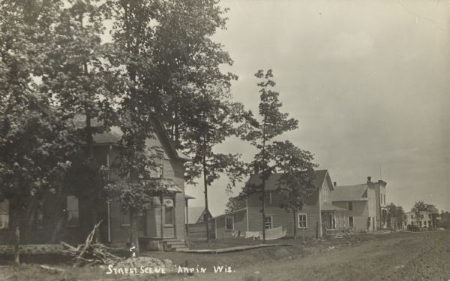
The Arpin Settlement of Jewish Farmers

Today the largest Jewish communities in Wisconsin exist in the cities with the highest populations. This, however, was not always the case. Around 1900, there were many new and budding Jewish communities across the state in places like Sheboygan, La Crosse, and Eau Claire. There were also smaller, rural communities emerging like the Arpin Settlement in Wood County. 

Read More
Comments Off on The Arpin Settlement of Jewish Farmers

Jewish Immigration from Russia to Sheboygan

The first Russian Jews arrived in Sheboygan in the 1880s. Like many other immigrants, they often followed their "landsleit" (fellow townsmen) to settlements in the new world, with the result that many of Sheboygan's Jewish immigrants came from a relatively small area east of Vilna and north of Minsk in current-day Belarus. They settled on the northwest side of Sheboygan, in a neighborhood bounded by 13th and 15th Streets, Geele Avenue on the north, and Bluff Avenue on the south.

Read More
Comments Off on Jewish Immigration from Russia to Sheboygan

End of content

No more pages to load