Missionaries and Land Rights: The Story of Erik Morstad and the Potawatomi

Some histories are not as straightforward as others, especially when cultures collide. It may come as no surprise that stories about the interactions between Native Americans and white settlers are sometimes one-sided. We can partly attribute this to the European tradition of…

Read More
Comments Off on Missionaries and Land Rights: The Story of Erik Morstad and the Potawatomi

OBJECT HISTORY: Potawatomi Beaded ‘Soldier Coat’

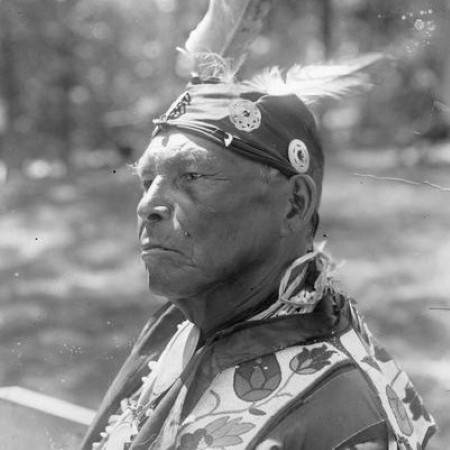
An elder spokesman for the Potawatomi Indians, Chief Simon Onanguisse Kahquados made a number of trips to Washington, D.C. in the early twentieth century in an effort to regain land that his people had lost through treaties with the United States government in the 1800s. Kahquados wore this coat on his last trip to Washington and also wore it on other important occasions, such as trips to the state capital in Madison where he often spent time researching and presenting information about his ancestry.

Read More
Comments Off on OBJECT HISTORY: Potawatomi Beaded ‘Soldier Coat’

Chief Simon Kahquados

Chief Simon Onanguisse Kahquados was the last hereditary descendant in a long line of Potawatomi chiefs, his family being one of the oldest known Potawatomi inhabitants of Wisconsin. An engaging speaker, Kahquados often served as an interpreter and provided a wealth of information to the Wisconsin Historical Society regarding traditional Potawatomi culture and history.

Read More
Comments Off on Chief Simon Kahquados

OBJECT HISTORY: Victor Berger Campaign Banner

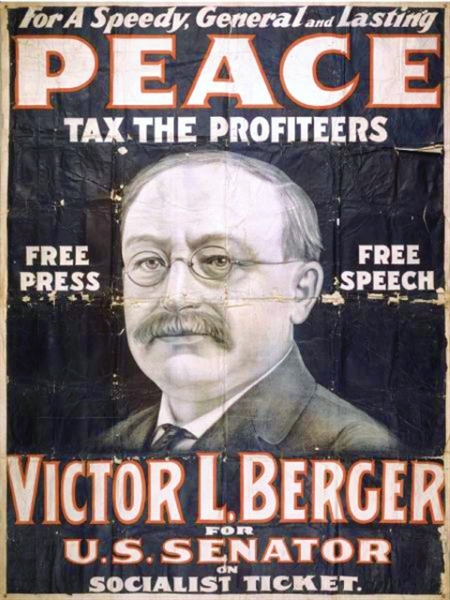
Milwaukee teacher and newspaper editor Victor L. Berger was arguably the most successful Socialist politician in the United States. This large poster documents Berger's campaign for United States Senate in a special election in April 1918.

Read More
Comments Off on OBJECT HISTORY: Victor Berger Campaign Banner

Wisconsin’s 1918 Special Election for Senate and the Trial of Victor Berger

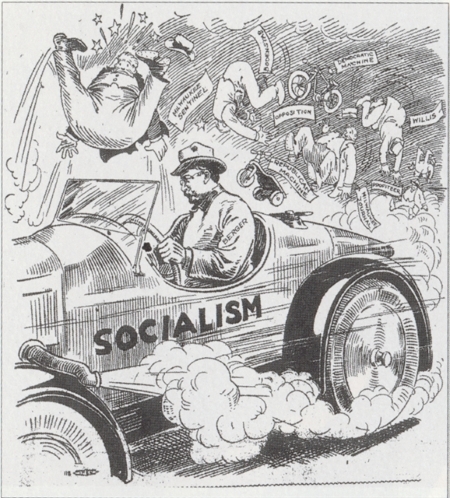
In 1918, Wisconsin held a special election to fill the seat of recently deceased Senator Paul Husting, who had been elected in 1914. The election was a three-way race between Democrat Joseph E. Davies, Republican Irvine L. Lenroot, and Socialist Victor L. Berger. Running under federal indictment, Berger placed third. He won 26% of the vote statewide in the April Senate election, winning 11 counties.

Read More
Comments Off on Wisconsin’s 1918 Special Election for Senate and the Trial of Victor Berger

End of content

No more pages to load