Ice cream has been a delicacy for hundreds of years, but in the last century, Wisconsin has come to be considered home to some of the world’s best ice cream. Babcock Hall, established in 1951, has contributed to this reputation, establishing ice cream as a symbol both of Wisconsin’s dairy farming past and its appeal as a summer destination for tourists from around the world.
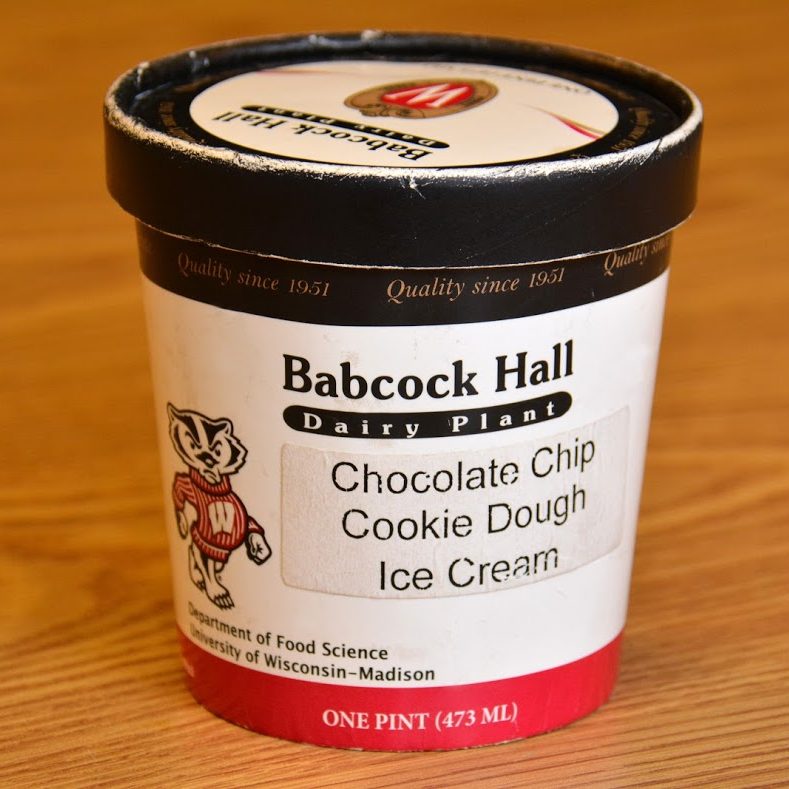
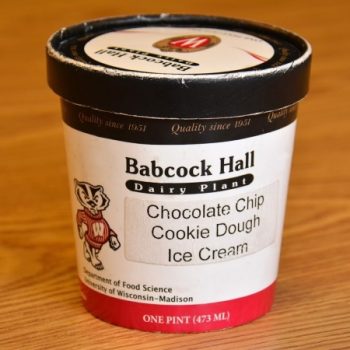
This particular carton of Babcock Hall ice cream is, unfortunately, quite light – there is no ice cream inside! The carton is white with a black stripe on top, a red stripe on the bottom, and a big Bucky Badger printed on the front in the same colors. Bucky Badger is the mascot of the University of Wisconsin. On the black top of the carton is another symbol of the University of Wisconsin – a white “W” in a red oval, with a golden-brown crest covering the outside. This carton once held chocolate chip cookie dough ice cream, Babcock Hall’s second-best selling flavor. On the back of the carton is a faded label, no longer readable, which once detailed the nutritional facts of the ice cream inside. In truth, we don’t need a label to tell us that ice cream isn’t very nutritious – or to tell us that it’s delicious.
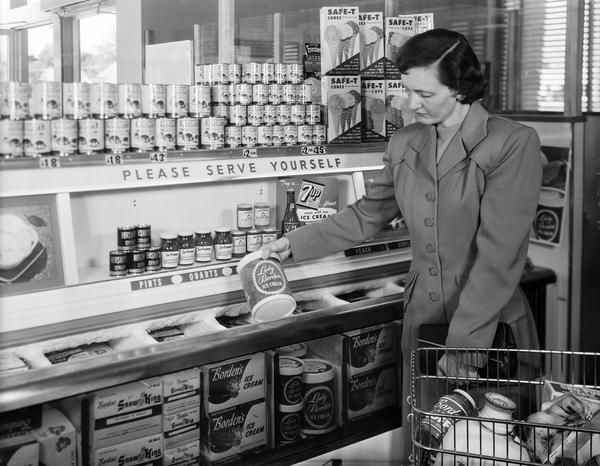
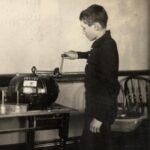
Babcock Hall was named after Stephen Babcock, a professor at the University of Wisconsin. In 1890 Professor Babcock invented the first machine to test the butterfat content of milk. This invention helped to establish Wisconsin as the dairy state, because it let consumers know that the milk they were purchasing tasted good and was safe to drink. “Babcock”, then, seems a fitting name for a building that now produces 75,000 gallons of ice cream a year (from cream that contains at least 10% butterfat) as well as milk and gourmet cheese. The ice cream recipe used to make the ice cream made at Babcock Hall has stayed the same since Babcock Hall’s founding. Graduates of the University from fifty years ago would not taste a difference between the ice cream today and what was served when Babcock Hall was built in 1951!
In 2017, tourism brought $20.6 billion into the state of Wisconsin. Many visitors come for outdoor recreation like fishing or winter sports, but others are attracted by the state’s reputation for excellent dairy products – after all, who doesn’t love ice cream or cheese? For this reason, Babcock Hall ice cream is an example of the ways in which our past affects our present. By helping Wisconsin to become the dairy state over 100 years ago, Stephen Babcock also contributed to Wisconsin’s current status as a sought-after summertime vacation spot.
,This humble of carton of ice cream helps show that the history of simple pleasures is not always all that simple!
Written by Sam Gee, in October 2018.
Want to learn more about the Babcock Ice Cream?
This video offers an behind-the-scenes look into the Babcock Hall Creamery on the University of Wisconsin-Madison campus.
Click on the video title (at left) to open in YouTube.
Essay by Sam Gee
Produced for Wisconsin Life by Jane Genske
They don’t call Wisconsin “America’s Dairyland” for nothing. The Babcock ice cream carton symbolizes both Wisconsin’s dairy farming past and its appeal as a summer destination for tourists from around the world.
Listen below to the segment from Wisconsin Public Radio’s Wisconsin Life.
Maureen McCollum:
When you see a carton of ice cream from Babcock Hall dairy plant, you’ll notice it’s not particularly flashy. It’s red, white and black. Bucky Badger appears next to a sticker that tells you the flavor. Maybe it’s blue moon orange custard, chocolate chip or Mocha macchiato. But does it really matter what the carton looks like? As the cliche goes, it’s what’s inside that counts, the Babcock ice cream carton is one of the many items included in the Wisconsin 101 project which tells the state’s history through objects. Jane Genske visited the Babcock plant to learn more about the importance of the beloved ice cream.
Jane Genske:
The Babcock dairy store on UW Madison’s campus is a place you can find one of Wisconsin’s most treasured ice creams. Glenda Jones is an employee at the dairy store. She loves selling and eating Babcock ice cream, and has been doing it for 16 years.
Glenda Jones:
And my favorite ice cream is chocolate peanut butter.
Jane Genske
Students, faculty and ice cream lovers crave Babcock ice cream to the point where they will drive from across the state to buy a gallon of their favorite flavor. Babcock dairy plant supervisor Raymond Van Cleve explains this phenomenon.
Raymond Van Cleve:
We’ve got people all the way from northern Wisconsin that drive down and pick up ice cream in the summertime, you know, once, once a week, you know, they come down big ice cream coolers and stuff, and pick up ice cream and take it back up north. So, but yeah, it’s always good to hear stories about people that come in, you know, and say, Babcock. We gotta have Babcock.
Jane Genske:
Inside the dairy plant, students studying food science can be found making ice cream and cheese.
Raymond Van Cleve:
First and foremost, we’re an educational facility.
Jane Genske:
Van Cleve says, UW Madison isn’t looking to get rich off of Babcock ice cream, cheese and milk. They simply want to educate students and advise nearby small farms and dairy factories. The ice cream’s recipe was created in the 1950s and hasn’t changed since. And this plant looks a lot like how it did when it opened in 1951. It’s filled with large metal vats of milk, pasteurizers and ice cream churning tanks.
Raymond Van Cleve:
I believe this is pretty close to the footprint of what everything was originally. Yeah, a lot of this place hasn’t really been remodeled or hasn’t been re touched with a lot of things since then. Some of these pieces of equipment are 50/60, years old,
Jane Genske:
Although Babcock isn’t the largest dairy plant their history is among the oldest, starting in the late 1800s. Babcock plant gets its name from UW Madison Professor Stephen Babcock, who helped develop the first butterfat test in 1890. With the butterfat test, consumers knew that the milk they purchased was high quality and safe to drink. UW Food Science Professor Emeritus Robert Bradley says the butterfat test revolutionized the dairy industry.
Robert Bradley:
This is Babcock Hall, and his first centrifuge is down in the front lobby, if you wanted to take a look at that. And the centrifuges is a means of of putting the denser product on the bottom and the lighter product on the top, which would be the fat column.
Jane Genske:
And Bradley says Babcock ice cream is on the denser side.
Robert Bradley:
It’s a top quality ice cream. We haven’t cut corners.
Jane Genske:
Because of Babcock’s invention, Wisconsin not only became known as America’s Dairyland, but helped his namesake ice cream become iconic.
Maureen McCollum:
That story about Babcock ice cream came from Jane Genske, a UW Madison student working on an internship this summer for Wisconsin life and Wisconsin 101 which tells the history of the state through objects. Hey Wisconsin life fans, we are giving our website a facelift, and we’d love to hear from you how we can make it better. Send us an email to wisconsinlife@wpr.org to let us know if you’d like to share your thoughts on our website. That’s wisconsinlife@wpr.org Wisconsin Life is a co-production of Wisconsin Public Radio and Wisconsin Public Television in partnership with the Wisconsin Humanities Council. Additional support comes from Lowell and Mary Peterson of Appleton. Want to make sure you catch every single Wisconsin life story. Subscribe to our podcast feed and find more Wisconsin life@wisconsinlife.org and on Facebook, Twitter and Instagram. I’m Maureen McCollum.

Wisconsin Historical Museum
This object history is part of the Wisconsin Historical Museum Mini Tour
RELATED STORIES
Becoming the Dairy State
The Men Behind the Butterfat Test
The Babcock Tester and the Wisconsin Idea
How Does a Babcock Tester Work?