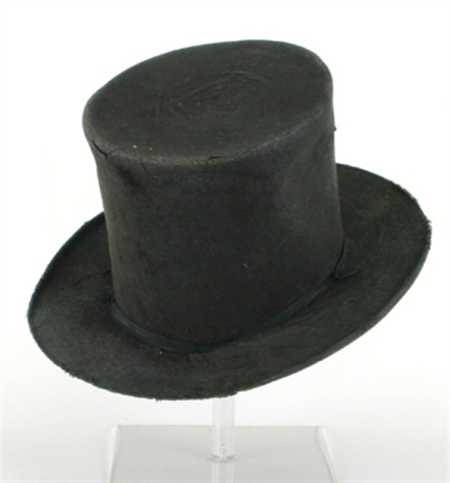
OBJECT HISTORY: Beaver Felt Hat
The beaver felt hat was one of the main reasons for the success of the fur trade in northern states, such as Wisconsin, and in Canada.
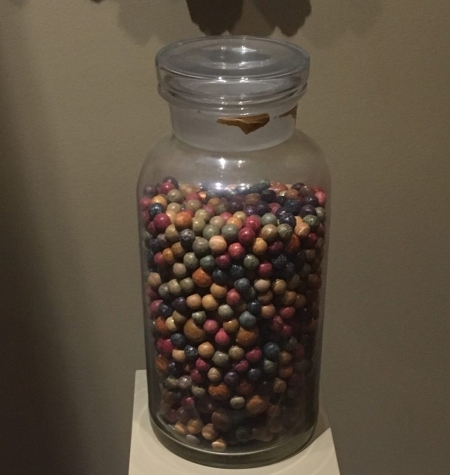
OBJECT HISTORY: Jar of Marbles
This jar of marbles was used by John Sweet Donald in his educational state fair exhibits during the 1920s. Donald was a University of Wisconsin professor in Agricultural Economics. His booth included a number of educational tools that he used to help show farmers the importance of keeping good financial records for their farms.

OBJECT HISTORY: Norwegian Trunk
Before coming to the Wisconsin Historical Museum, this trunk belonged to a Norwegian family. It traveled from an ocean port in Norway, across the Atlantic, and, eventually, to Wisconsin.
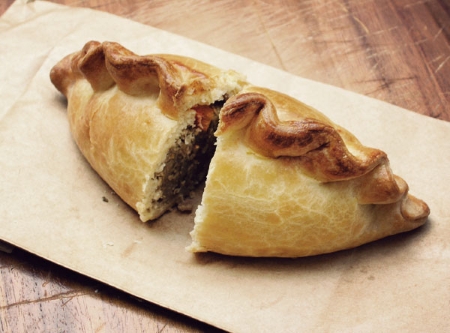
OBJECT HISTORY: Pasty
The lead mining industry of the 1830s and 1840s brought miners from Cornwall, England, a county of South West England, to southwestern Wisconsin. The miners brought Cornish traditions like the pasty, a filling food for hungry miners.
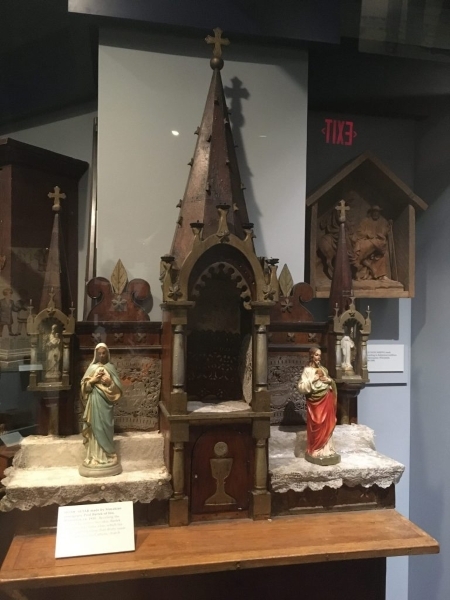
OBJECT HISTORY: Slovak Catholic Altar
Immigrants coming to America by boat during the 19th and early 20th centuries were extremely limited in the items that they could bring. A trunk that a whole family might use to carry their belongings would usually be no bigger than three feet long and one foot wide. However, this altar is not something that would have been brought over in a trunk and was built in Ino, Wisconsin by Slovakian immigrant Paul Bartek.