Milwaukee’s Music Scene in the Late Nineteenth Century
The Wisconsin music industry experienced a dramatic growth in the second half of the nineteenth century, as Milwaukee became a national leader in musical performances and a manufacturing center for the production of musical instruments. The city was home to a vibrant German immigrant community that brought with them a deep passion for music. Because these German immigrants were financially better off than other immigrant communities, they were able to promote their culture throughout the city, and hosted a variety of musical societies and performances known as Sangerfests and Wagnerfests. German community leaders also worked to promote the inclusion of musical instruction in the city’s public schools throughout the late 1800s.
Milwaukee’s rich cultural experiences earned it the title of “German Athens” or the “Athens of the West,” as musical activity in the city expanded with the social and industrial growth of the state. Operas were held almost daily in the city’s Schlitz Park, and a variety of new musical societies were formed.
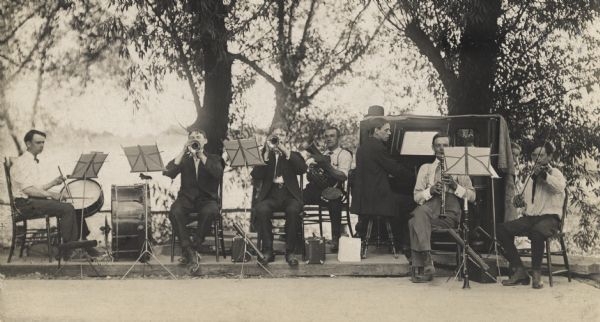
A band concert in a Milwaukee park, circa 1912. Photo by J. Robert Taylor via the Wisconsin Historical Society, #55855.
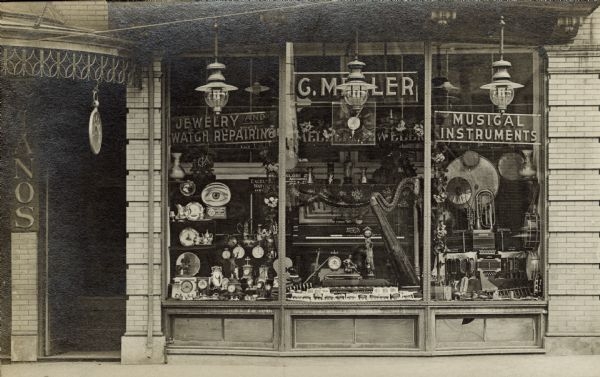
Postcard image of the G. Miller storefront window in the Walker's Point neighborhood displaying musical instruments as well as clocks and watches. Image from the Wisconsin Historical Society, #110271
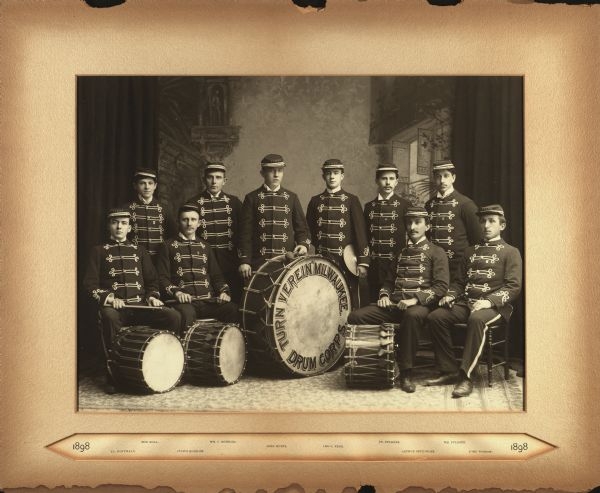
The Milwaukee Turners Drum Corps, 1898. From the Wisconsin Historical Society, #89384.
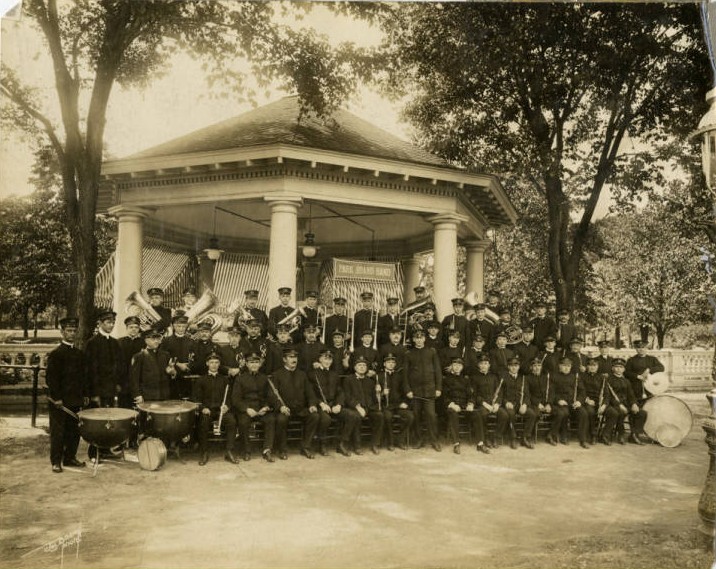
The Park Board Band. Photo by Joseph Brown via the Milwaukee Public Library, ID #Music.Bands.pre1960.010.
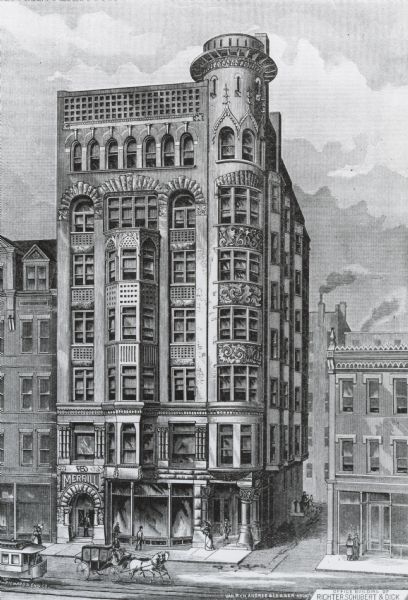
"New Music Palace," formerly the Richter, Schubert, and Dick office building (1892). Image courtesy of the Wisconsin Historical Society #54260
The city’s reputation enticed many national and international musicians and composers to settle in Milwaukee. Many of these musicians had to supplement their meager incomes, opening music schools in their homes to the city’s middle and upper classes. Most of these teachers would hold public recitals for their students. Invitations to attend these performances, many of which were free and held in local churches, were posted in the city’s various newspapers.
Milwaukee’s musical scene continued to influence American culture towards the end of the nineteenth century. Wisconsin composers and orchestra leaders, like Hugo Kaun and Christopher Bach, were in high demand throughout mid-America for their concert pieces and orchestral duties. During the Chicago’s World’s Fair in 1892, Wisconsin musicians and their products were on full display, as orchestras and German choral and singing societies made a grand impression. Milwaukeen Charles K. Harris composed the hit song of the fair, “After the Ball,” gaining national acclaim and selling millions of copies his composition.
Michael G. Corenthal, ed., The Illustrated History of Wisconsin Music, 1840-1900: 150 Years of Melodies and Memories (Milwaukee: MGC Publications, 1991).
Ann O. Ostendorf, “Where Music Is Not The Devil Enters: Children’s Music Instruction in Late Nineteenth Century Milwaukee,” The Wisconsin Magazine of History 89:2 (2005-2006), 2-11.