
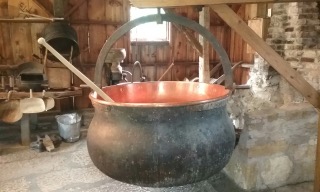
OBJECT HISTORY: Swiss Cheese Kettle
This cheese kettle, now held at the Swiss Historical Village in New Glarus, reflects Green County’s cheesemaking past. Made out of copper because of its ability to retain heat well and to be heated easily on an open fire, this cheese kettle symbolizes the increasing importance of cheesemaking in Wisconsin beginning in the 1870s.
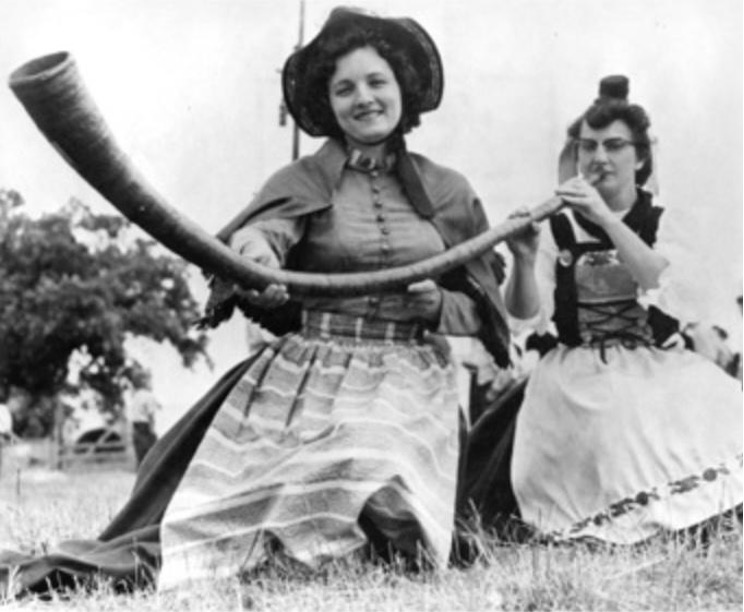
Swiss Immigration to New Glarus
For nearly a century, southeastern Wisconsin and especially Green County was a hotbed of Swiss immigration. Even though the immigration slowed dramatically in the early 1900s, the area still preserves a distinctive Swiss character.
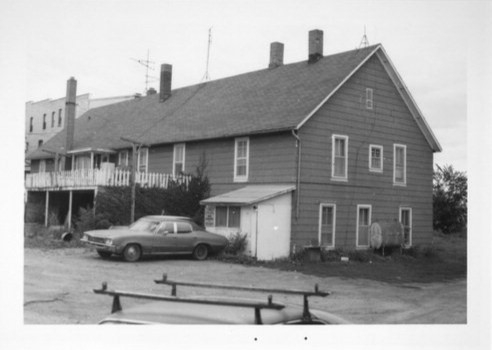
Early Cheese Factories in New Glarus
Green County has long been known for its cheese factories, particularly ones making Swiss cheese. However, when the first Swiss immigrants arrived it wasn’t at all clear that they would go into cheesemaking at all. New Glarus’s rise to prominence as a cheesemaking town resulted from the development of its factories and the city’s increasing industrialization.