Maureen McCollum: The 1970s were the height of the second wave of feminism, when women in the U.S. were advocating for equal rights and opportunities to men. As Molly Hunken tells us, it was during this time that one woman expressed her feminist views by creating art made out of a unique medium: bras.
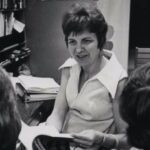
Molly Hunken: Artist Marge Engelman has spent much of her life in Wisconsin. The walls of her Madison apartment reflect that time as they’re covered with countless art. Despite Engelman’s own works of art that currently adorn her apartment’s walls, she says she wasn’t always an artist.
Marge Engelman: When I was in grade school, a teacher had implied that I did not have artistic ability, so I took that seriously.
Molly Hunken: Engleman says that he never visited art galleries until she was 38, and she definitely didn’t make her own art. That changed when she discovered that the University of Wisconsin-Extension offered courses in contemporary art.
Marge Engelman: I found out there was a program in the School of Home Economics, and it was called Related Art. So I registered. I was about 40 years old, so I was a different kind of student.
Molly Hunken: Through this program, Engelman got her master’s degree in art after two years. She taught introductory art courses for a few years, and was then appointed as the director of outreach at UW-Green Bay. Engelman says that around this time, change was taking root.
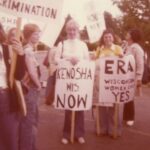
Marge Engelman: The feminist movement came along, and I became a “flaming feminist” because I’ve felt quite a bit of discrimination growing up, and also working. Because women weren’t valued as much as men.
Molly Hunken: Engelman says she was inspired by this moment. It led her to start a childcare center on UW-Green Bay’s campus for students and faculty. Plus, she was still creating art, including a historical piece she created in 1971 that was inspired by the bra-burning feminists.
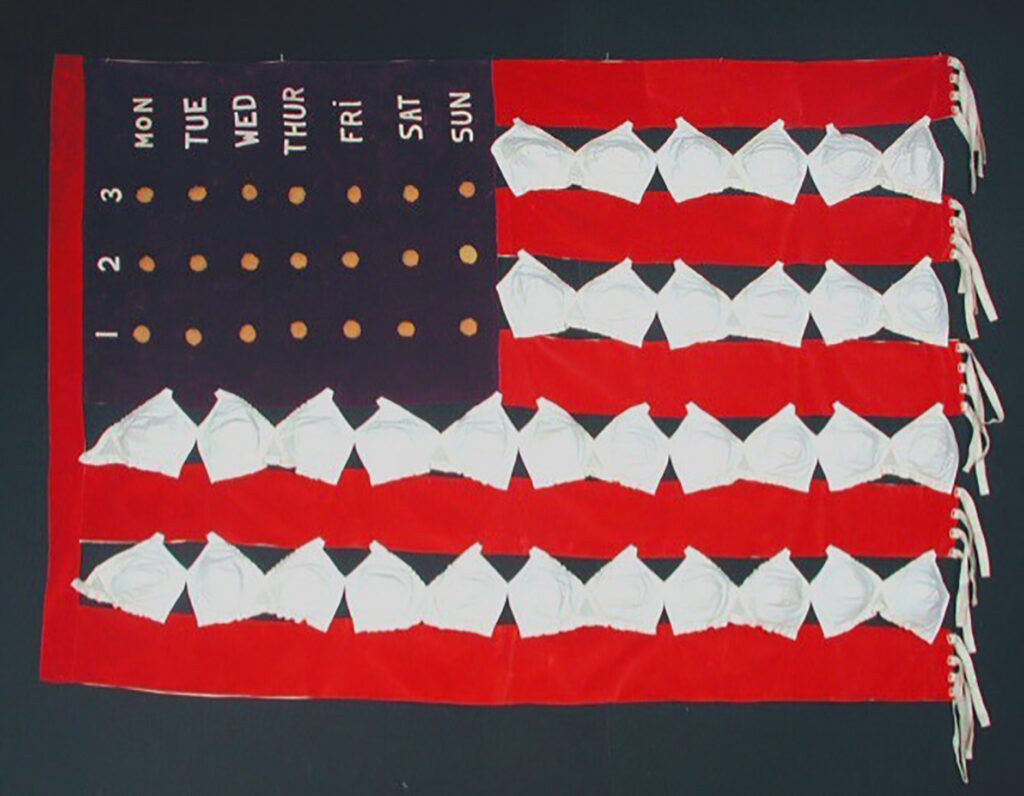
Marge Engelman: But then it was about that time I got the idea for the bra banner. And I called it the “The Land of the Freed-up Woman.”
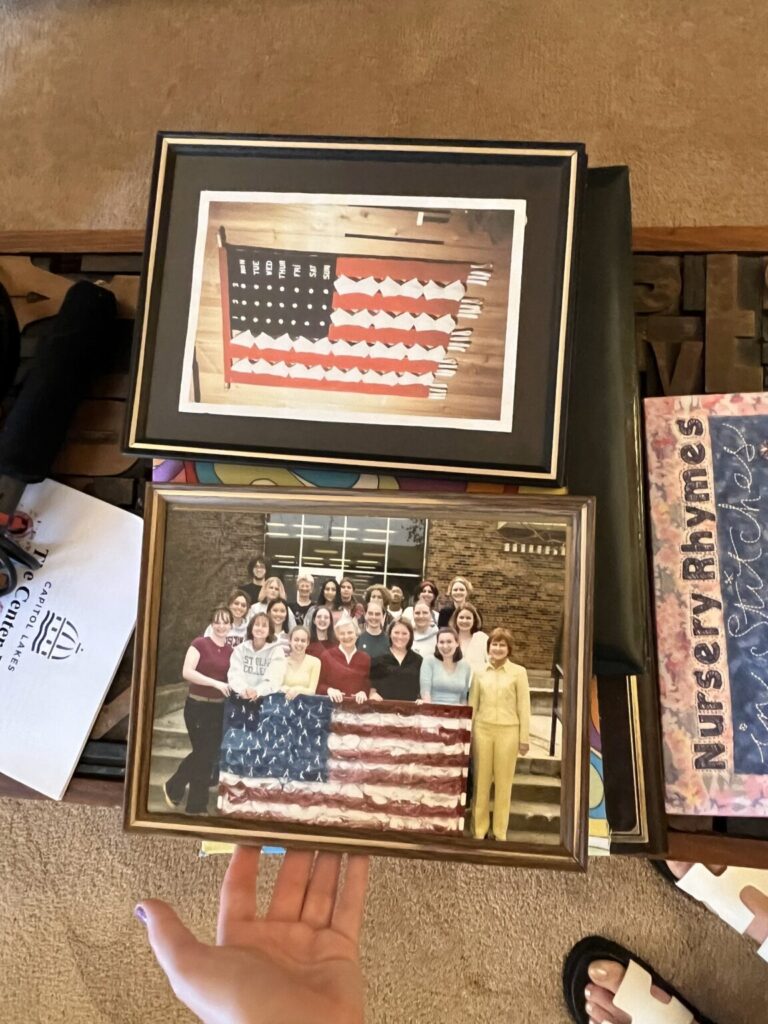
Molly Hunken: The banner looks like the American flag, but features stripes made out of red velveteen and twenty white padded bras. It also alters the stars in the corner of the flag by replacing them with foam modeled after birth control pills.
Marge Engelman: The pill, the contraceptive pill had just come out and so I decided I could visualize that in the field of blue.
Molly Hunken: She created the flag in response to her experiences with discrimination. During her time in administration at UW-Green Bay Engelman says she was the only woman on staff.
Marge Engelman: There were things that were said to me, and opportunities I didn’t have because I was a woman, and I thought people should start thinking about that.
Molly Hunken: At the age of 96, Engelman is still creating art out of her Madison home.
Marge Engelman: I have made a sewing center here in the back, so I put my sewing machine here.
Molly Hunken: Some of her art relates to more tame themes, like nursey rhymes.
Marge Engelman: Mary had a little lamb whose fleece was white as snow.
Molly Hunken: But like the bra flag, she continues to create pieces that are politically motivated.
Maureen McCollum: Molly Hunken brought us that story on Marge Engelman’s bra flag. The art itself is part of the Wisconsin 101 project which tells our state’s history through objects. Wisconsin Life is a co-production of Wisconsin Public Radio and PBS-Wisconsin in partnership with Wisconsin Humanities. Additional support comes from Lowell and Mary Peterson of Appleton. I’m Maureen McCollum.