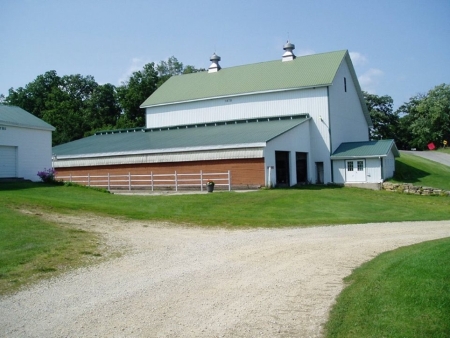
OBJECT HISTORY: The Hefty-Blum White Barn
Among the many barns that contributed to Wisconsin’s place as a major dairy producing state is a Swiss barn that was built in 1878 in Green County. This barn, the Hefty-Blum White Barn, was used to raise cows for over one hundred years.

The Evolution of a Swiss Dairy Barn
The expansion of Wisconsin’s dairy industry in the 20th century not only altered the economy of the state, but it also influenced the structure of the very barns that housed the bovine champions of the industry. Barns must be adapted and altered to fit the needs of the farmer, whether that means expanding to house more livestock or utilizing newer technology. To remain useful for the farm, barn buildings needed to be adaptable.
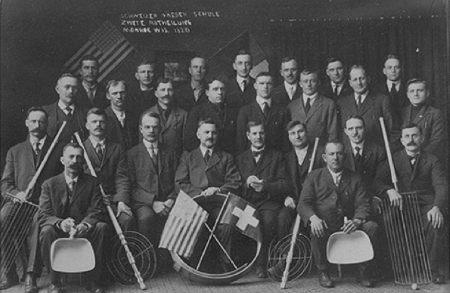
The Swiss Roots of America's "Dairyland"
While Green County’s cheese production has been surpassed by other parts of the state, it is still one of the highest producing counties of foreign-type cheeses in the state. Swiss immigrant farmers such as Thomas Hefty who daily provided at least 55 cows worth of milk from his Swiss style barn in rural Green County ultimately shaped the image of Wisconsin as a dairy state for generations.