Women in the American Art Pottery Movement
Women played a central role in the American Art Pottery movement, both as leaders like Pauline Jacobus and as workers like Lulu Deveraux Dixon.
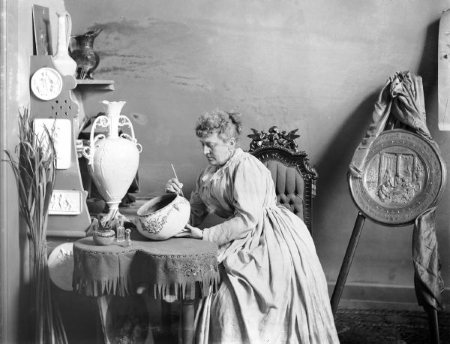
Chicago-born artist and entrepreneur Pauline Jacobus was the central figure of Edgerton, Wisconsin's art pottery movement. In 1888, Jacobus and her husband Oscar relocated the Pauline Pottery from Chicago to Edgerton to take advantage of the area's quality clay.
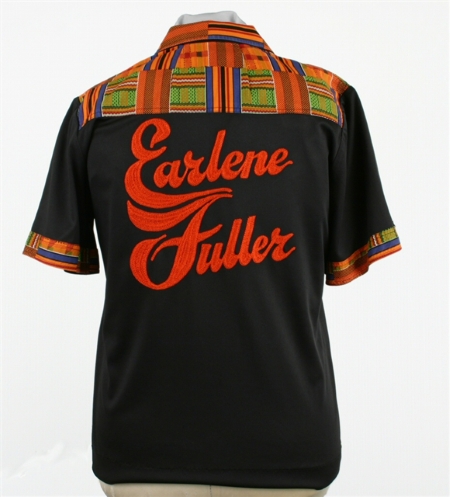
This shirt, which features an African kente cloth print, was designed, made and worn in the mid-1990s by Milwaukee's Earlene Fuller, an African American bowler and seamstress.
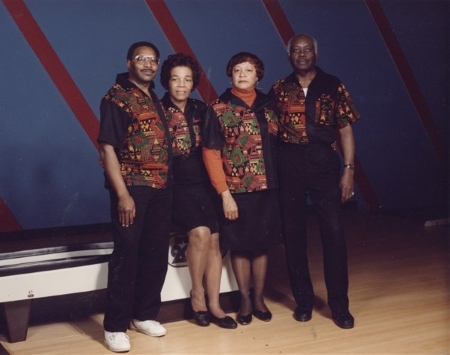
Earlene Fuller designed and made bowling outfits for numerous black and white teams in Milwaukee and elsewhere from 1970 through the mid-1990s. She was a member in two African American bowling organizations — the National Bowling Association and the Milwaukee Bowlers Guild, Inc. — and in the 1990s began incorporating kente cloth and other African-inspired fabric patterns into the shirts she made for her own teams.
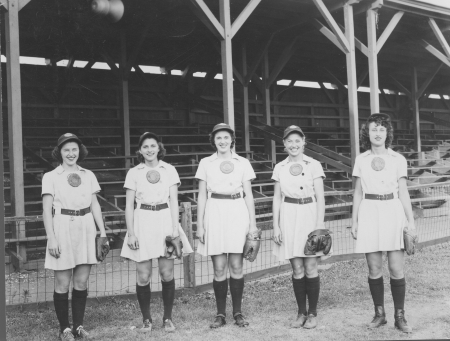
Philip Wrigley, the gum manufacturer and owner of the Chicago Cubs, conceived of the All-American Girls' Softball League in 1942 as World War II and its drain on manpower threatened to shut down Major League Baseball. Wrigley's ideas about gender norms helped shape the league, from its strict rules to its uniform policies.
As the United States entered World War II in 1941, the war’s impact on American culture was felt far and wide. Aside from the obvious strains on economic and industrial production, American recreation was temporarily put on hold. This included much of…