Most people recognize the patriotic World War II campaign of “Rosie the Riveter,” which aimed to recruit female workers to patch the gaps in industrial labor left by male military enlistment. Shipyards, specifically, hired women into the war effort at an exponential rate as governmental demands for military vessels dramatically increased. Rapidly adapting to undertake tasks which had rarely been assigned to women before, they worked as testers, burners, shrinkers, electricians, small parts factory workers, porters, painters, stock clerks, drill press operators, shipfitters, and welders. National statistics from 1943 show that the average proportion of women in the total workforce increased from 6.48 to 13.3 percent in shipyards between March and September, and around two million women worked in and made significant contributions to war-related industries, so that American production far outpaced that of the Axis countries. As women joined the workforce to aid their country, they not only gained employment benefits and improved their quality of life, but earned self-sufficiency, a sense of personal accomplishment, and increased social worth from newly learned industrial skills.
Many Wisconsin women found industrial work in the shipyards of Sturgeon Bay, Superior, Manitowoc, and Marinette. Whether they had previously worked as teachers, secretaries, or stay-at-home mothers, the desperate need for shipyard workers encouraged women to seek new opportunities in manufacturing. While some filled clerical positions or managed security procedures, others undertook more hands-on roles as welders and the like. At the same time, these inspiring mothers, wives, sisters, and daughters balanced regular household duties with their strenuous shifts at the shipyards and navigated uncertain or negative attitudes about the presence of women in so-called “men’s work.”
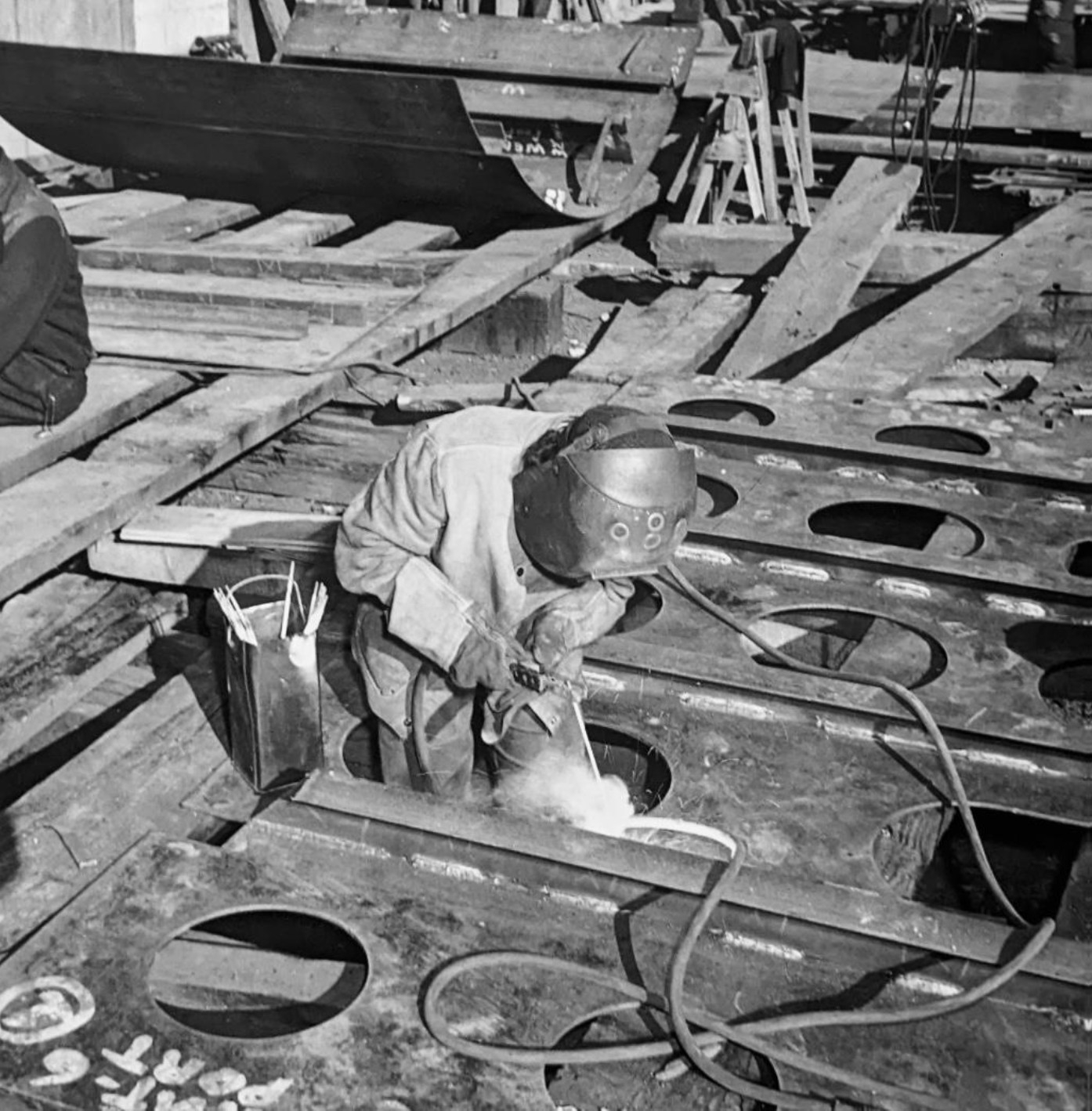
During World War II, women filled many holes in industrial occupation left by the men who enlisted in military service for World War II. Rapidly adapting to undertake tasks which had rarely been assigned to women before, they worked as testers, burners, shrinkers, electricians, small parts factory workers, porters, painters, stock clerks, drill press operators, shipfitters, and welders. Image from the Door County Maritime Museum.
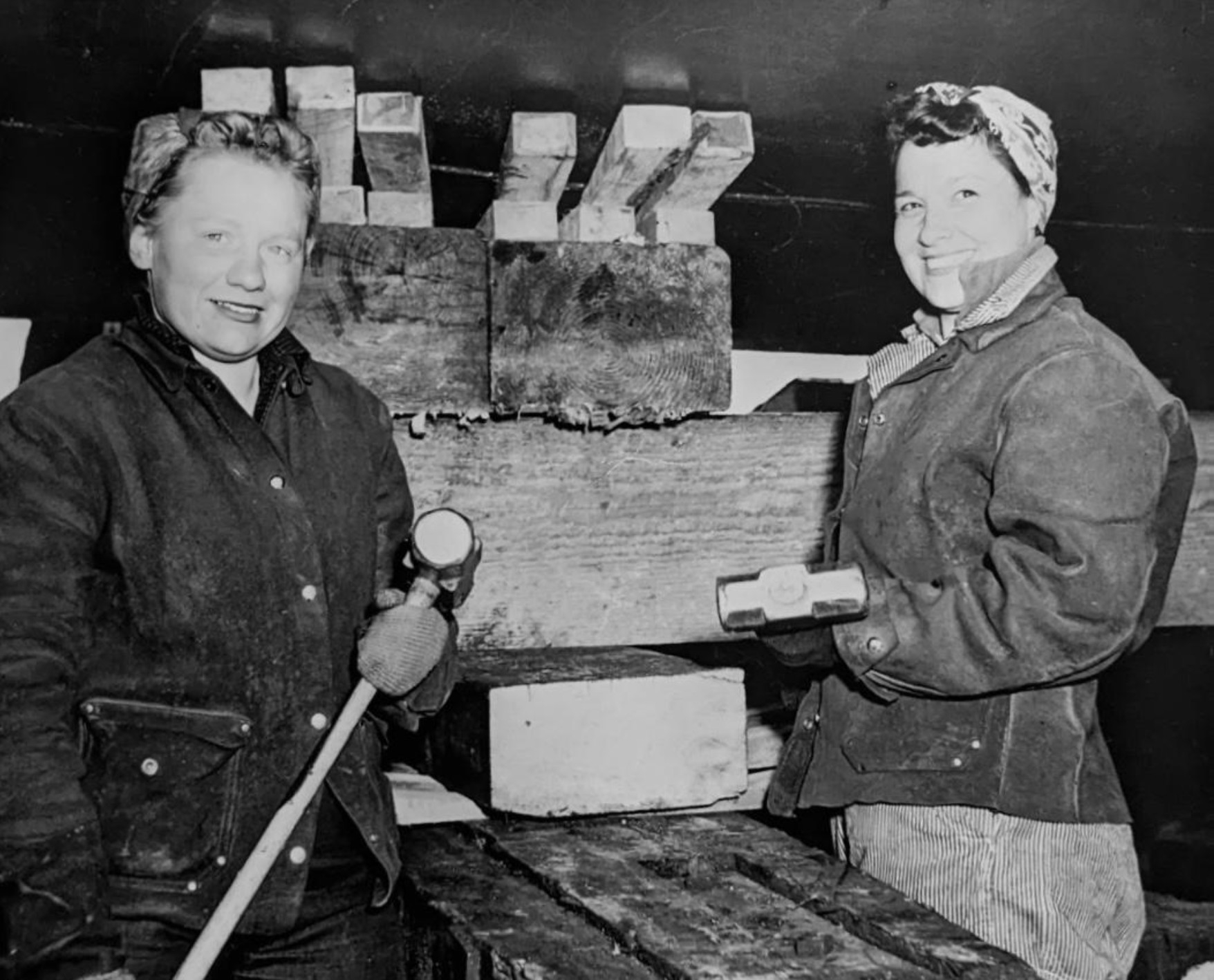
Pictured here, Delia Petersen from Denmark and Evelyn Joniaux from Green Bay joined many other Wisconsin women in marching to fill wartime holes in industrial occupation left by the men who enlisted for World War II. National statistics from 1943 show that around two million women worked in and made significant contributions to war-related industries, so that American production quickly outpaced that of the Axis countries. In particular, shipyards hired women into the war effort at an exponential rate. Image from the Door County Maritime Museum.
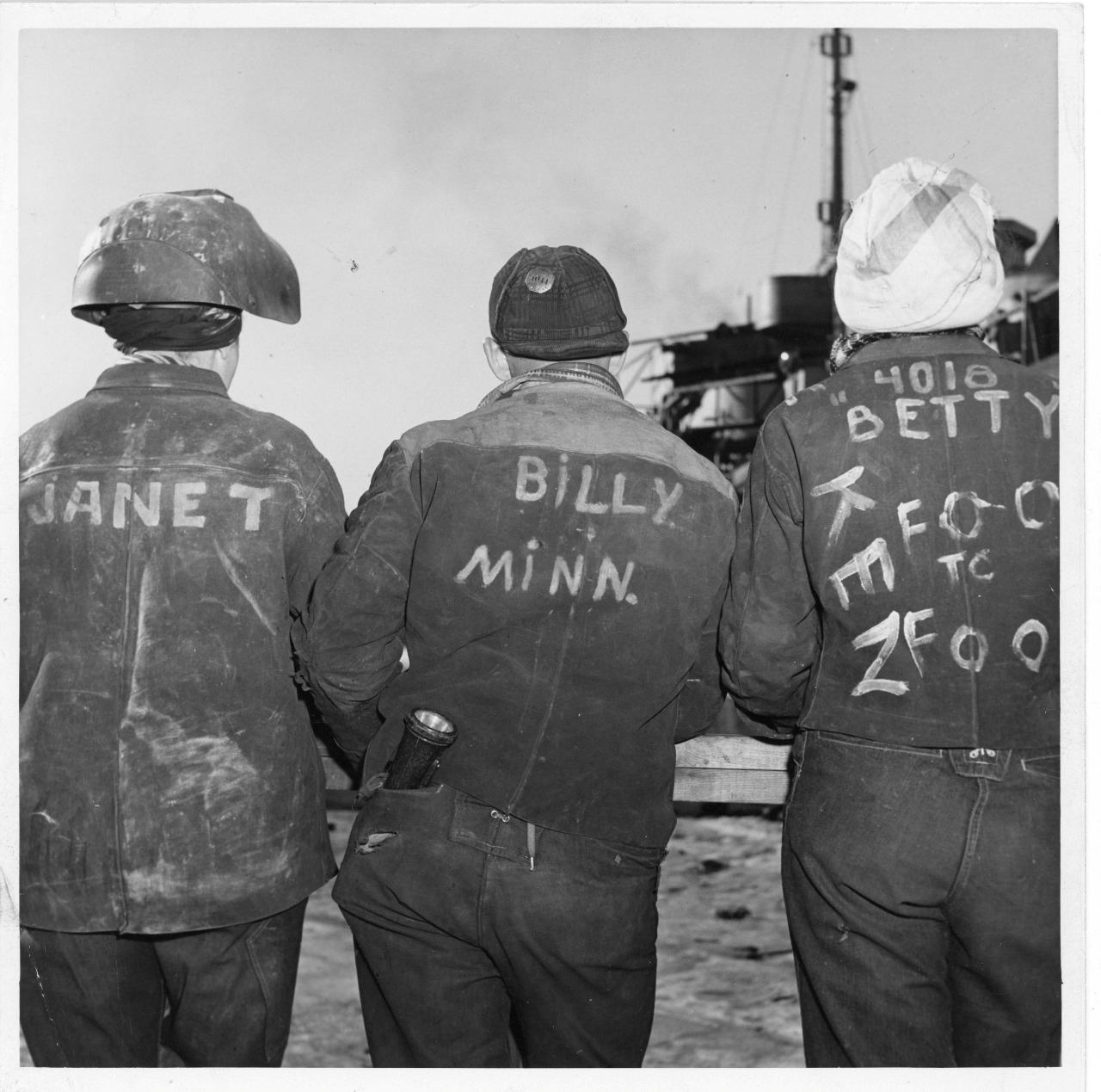
Three women shipbuilders, in their welding uniforms. Image from the Door County Maritime Museum, #1997.1.436.s
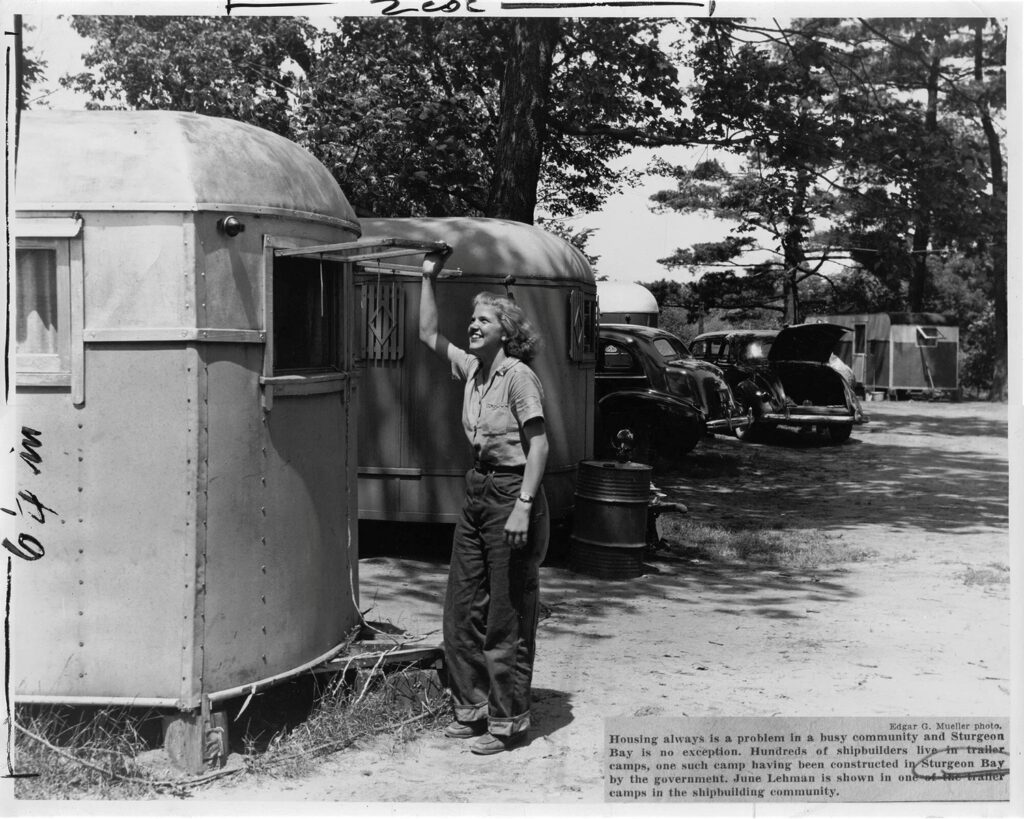
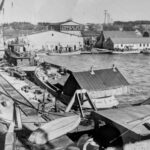
The World War II shipbuilding boom in Sturgeon Bay manifested in a housing shortage across the peninsula. Shipyards employed as many individuals as possible, resulting in a large population increase that ultimately forced the city to build cheap barracks and trailer camps to accommodate its wartime workers. Image by Edgar G. Mueller, 1943, via the Sturgeon Bay Historical Society.
In Door County, the significant influx of shipyard employees resulted in a housing shortage throughout the peninsula. The local geography and infrastructure, combined with the necessity to employ so many men and women for shipbuilding, forced workers to stay in hastily built barracks and mobile trailer homes. However, despite the less-than-pleasant living situations, the working women persevered; increasing productivity, ending the widespread economic scarcity left by the Great Depression, and patriotically contributing to wartime production. In addition to the adaption of makeshift housing for some, women with children who previously only worked in domestic roles grouped together to create communities of mutual assistance and solidarity. By sharing household responsibilities like cooking and cleaning, living together in apartments to save money and resources, and staggering shift times to ensure childcare, mothers secured a place for themselves in the workforce and provided for their families through trying times — all while supporting their country in war.
Ultimately, with the end of World War II in 1945, the high demand for industrial work quickly receded. While some women continued their employment in the shipyards (in some cases for decades before retirement), others packed up and returned to their families or moved on to other occupations. Regardless, each and every one of these women carried with them a narrative of perseverance and productivity from their wartime efforts and contributions. Though the government campaign itself called women to temporary employment positions, the female patriotism of World War II significantly altered the male-dominated perspective henceforth, empowering countless women and allowing their societal roles to expand further in postwar America.
Kathy Borkowski, “Interview with Vivian Sekey, May 14, 1992, Sturgeon Bay, Wisconsin.” Wisconsin Women during World War II Oral History Project Interviews, 1992–1994. Wisconsin Historical Society. Accessed 31 October 2023. https://whs.aviaryplatform.com/collections/233/collection_resources/17909.
Kathryn Borkowski, Stephen Kolman, Tracey Deutsch, and Kristina Ackley. “Wisconsin Women during World War II Oral History Project Interviews, 1992–1994.” Wisconsin Historical Society. Accessed October 31, 2023.
Sarah Hawkes, “Who Was Rosie the Riveter?” U.S. History Scene, 16 April 2015. Accessed October 2023. https://ushistoryscene.com/article/rosie-the-riveter.
Herb Reynolds, “Sturgeon Bay Shipbuilding and Dry Dock Company.” Sturgeon Bay, WI: Door County Maritime Museum, 2023.
“Rosie the Riveter.” History.com, 23 April 2010. Accessed October 2023. https://www.history.com/topics/world-war-ii/rosie-the-riveter.
“Women Shipyard Workers.” Sturgeon Bay, WI: Door County Maritime Museum, 2023.