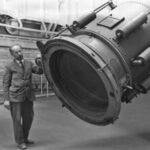
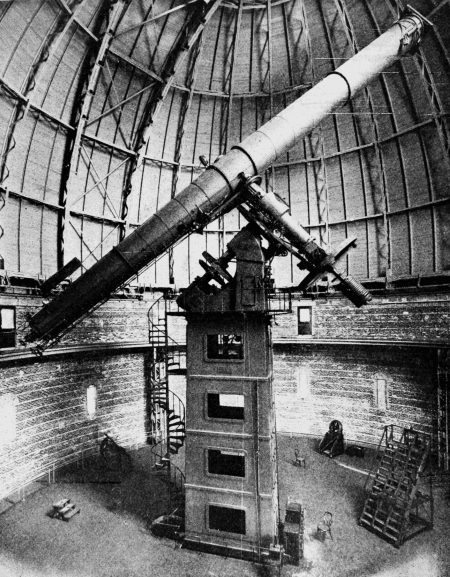
The 40-inch refracting telescope at Yerkes Observatory in Williams Bay, Wisconsin, contains the world’s largest refracting lenses. Built in 1895, the telescope contains two lenses, one made of crown glass, and one made of flint glass. The lenses are each 40 inches in diameter, weigh 500 pounds, and have a 62-foot focal length. The telescope and observatory are owned by the University of Chicago. Making several important astronomical discoveries in the 20th century, the Yerkes Observatory has come to be known as one of the birthplaces of modern astrophysics. The telescope continues to contribute to the field of astrophysics and attracts many famous astronomers to Williams Bay.
Written by Kelsey Corrigan, December 2014.

This object has been featured on WPR's Wisconsin Life!
Produced for Wisconsin Life by Erika Janik and Kelsey Corrigan.
Built in 1895, the 40-inch refracting Yerkes Telescope in Williams Bay marks one of the birthplaces of modern astrophysics.
Listen below to the segment on Wisconsin Public Radio’s Wisconsin Life:
Erika Janik: Built in 1895, the refracting telescope at Yerkes Observatory in Williams Bay is the world’s largest. As part of our ongoing series, Wisconsin 101, Kelsey Corrigan tells us about the telescope and the observatory that became known as one of the birthplaces of modern astrophysics.
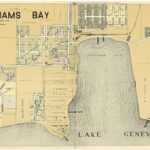
Kelsey Corrigan: This is the largest refracting telescope in the world, which is in Williams Bay, Wisconsin, at Yerkes Observatory. And the telescope is a 40-inch refracting telescope, and it’s huge. The University of Chicago built this telescope starting in 1895 and the project was completed in 1897. There are a lot of reasons actually why they chose Williams Bay. So the telescope was funded by the University of Chicago. It was actually chosen over twenty-seven other locations. And the reason they chose Williams Bay was because it was still close enough to Chicago that people could technically still commute there. And what was most important about Williams Bay is it was outside of Chicago’s pollution zone, and so there was no smoke, no light pollution yet at this time. So that was one reason why they chose it. Also, I thought this was kind of cool, the observatory was built on the tallest hill in 100-mile radius of Chicago. Yerkes Observatory itself is one of the last observatories that was not built on a mountain.
The people who made the 40-inch lenses, the company was called the Alvin Clark & Sons Company. They were an American-based company, but the lenses themselves, and they were actually made in Paris. There weren’t a lot of places in the world that could make these lenses this big. That’s why it was hard to make such huge telescopes, and why this 40-inch refracting telescope was seen as this huge deal at this time.
The telescope in Williams Bay is a refracting telescope, but there are much larger reflecting telescopes. Early 1900s, the trend was that astronomers were using refracting telescopes, and astronomy was very popular with universities. It’s a huge sign of prestige. So universities were making these refracting telescopes, wanting to get the biggest and the best telescopes. And then right after the telescope at Yerkes was made, the switch kind of occurred, from refracting to reflecting telescopes, and the switch occurred because refracting telescopes have a couple issues, and the biggest issue is that they produce images that are blurred on the edges, because the way they focus the light’s wavelength, if there are different wavelengths, it comes in at different degrees and produces images that are blurred. So that’s why the switch kind of went over to reflecting telescopes that don’t create these blurred images.
My hobby is history. I like learning about history, but my primary focus here at school is more science, biology, and just having this telescope in Wisconsin attracted famous people from all over the world, famous astronomers. I mean, Edwin Hubble himself was in Wisconsin doing research. And so the fact that this telescope attracted a ton of different people all over the world, and it really brought prestige to Wisconsin.
Erika Janik: This story was part of Wisconsin 101 a collaborative effort to share Wisconsin’s history in objects. Wisconsin Life is a co-production of Wisconsin Public Radio and Wisconsin Public Television in partnership with the Wisconsin Humanities Council. Additional support comes from Lowell and Mary Peterson of Appleton. Find more Wisconsin Life on our website, wisconsinlife.org and on Facebook. I’m Erika Janik.