The city of Manitowoc has been deeply shaped by its maritime industry. Located directly on the shores of Lake Michigan, Manitowoc’s identity is intimately tied to the Great Lakes. Manitowoc utilized the access to Lake Michigan to build an economy fueled by lake commerce, shipbuilding, and tourism. Although maritime industry has evolved over time, it is still important to Manitowoc’s identity and ingrained in the culture of the city.
Manitowoc’s maritime industry dates all the way back to its founding in 1836. Like much of Wisconsin, Manitowoc was home to Native Americans for centuries before Europeans settled in the state and established towns. Settlement increased in Manitowoc and in the neighboring town of Two Rivers in 1836 when more Europeans came to the area after rumors of a gold strike near Kewaunee.
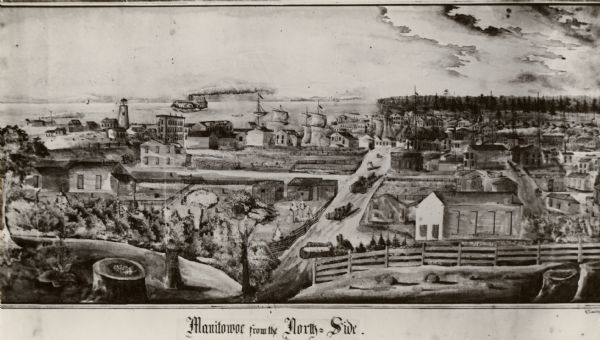
This 1856 painting, by G. Kirschtez, shows Manitowoc from the North Side. Image via the Wisconsin Historical Society, #38458.
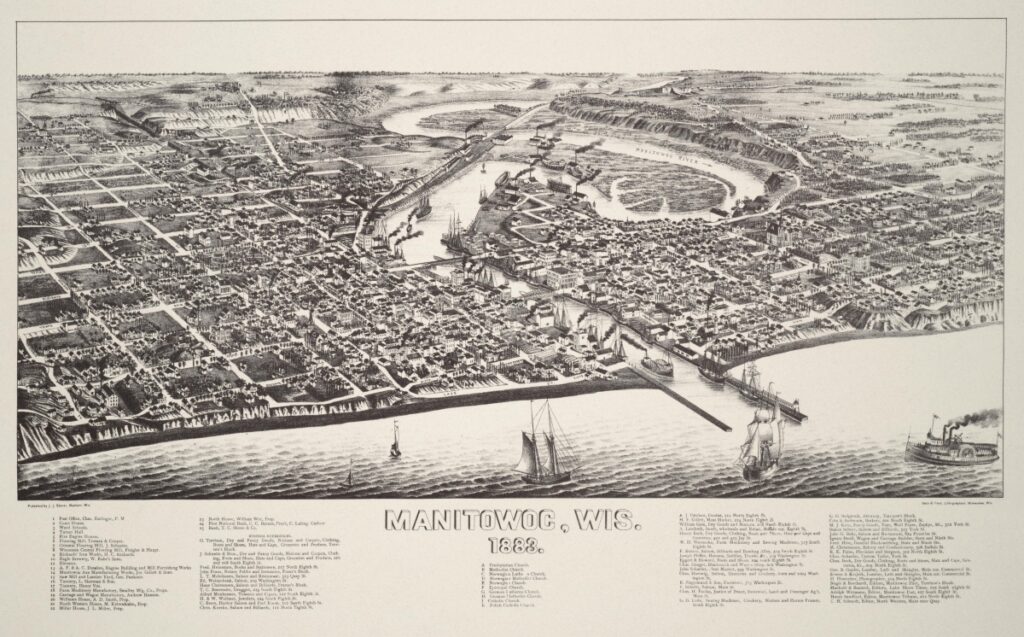
A bird’s-eye view map of the city of Manitowoc in 1883 by J.J. Stoner. Image via the University of Wisconsin Digital Collections.
From very early on it became clear to the settlers of Manitowoc that the town had natural advantages due to the proximity to Lake Michigan. With a wide and deep bay, Manitowoc was soon recognized as the only point on the west side of Lake Michigan where boats were safe from any strong southwest winds. These nautical advantages were so paramount to the city that in 1836, the first government of the Manitowoc territory wrote to Congress asking for funding to build harbors and lighthouses along the coast of Lake Michigan. With little progress made, the people of Manitowoc continued to ask Congress for money to improve the harbor over the next few decades. Manitowoc was eventually made a port of entry in 1854, and soon after, the potential of the harbor for economic and commercial growth was recognized by Congress and the citizens alike.
The commerce and transportation industry born out of the harbor’s development further classified Manitowoc as a port city, driven by maritime activity. Access to the harbor was how many settlers first arrived in Manitowoc. Lake Michigan’s shoreline was an entry to the Great Lakes region of the country for Manitowoc, which naturally facilitated trade early on in its establishment. By 1850, the commercial activity in Manitowoc reached a new height. The increase of imports and exports called for a greater attention to the quality and scope of the harbor, so the town soon invested in shipbuilding in 1852. The first prominent shipbuilding company in Manitowoc was The Burger Boat Company, founded by Henry B. Burger in 1863. The Burger Boat Company gained credibility in Wisconsin and built vessels for the Navy, along with tugs, rescue crafts, mine sweepers, and subchasers during World War I.
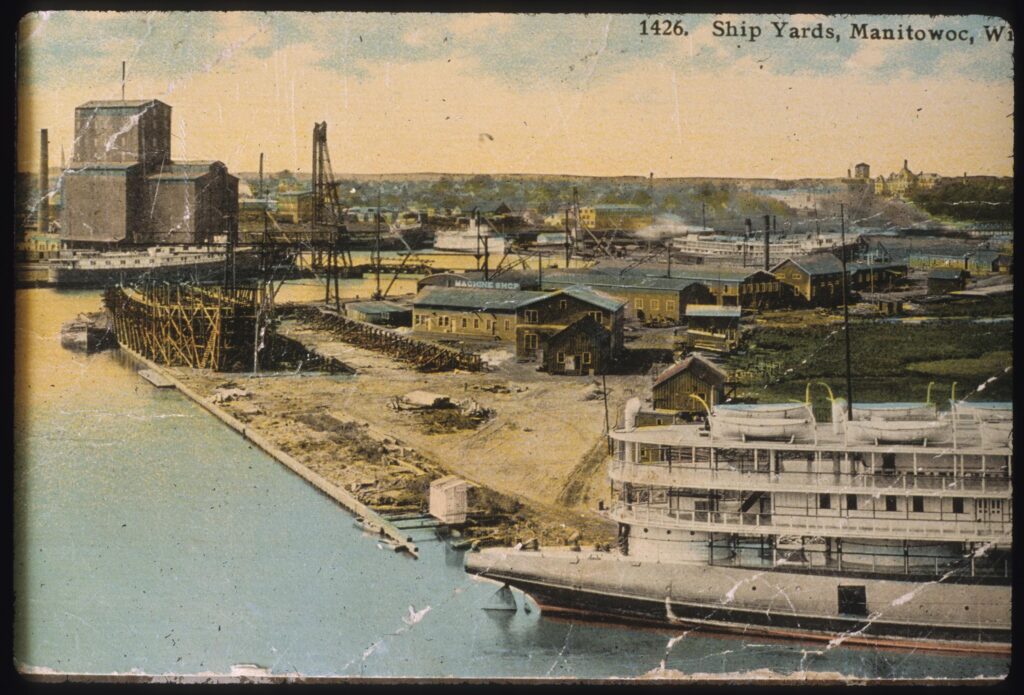
A c.1913 postcard of the ship yard at Manitowoc. Image via UW Digital Collections, #T.121.
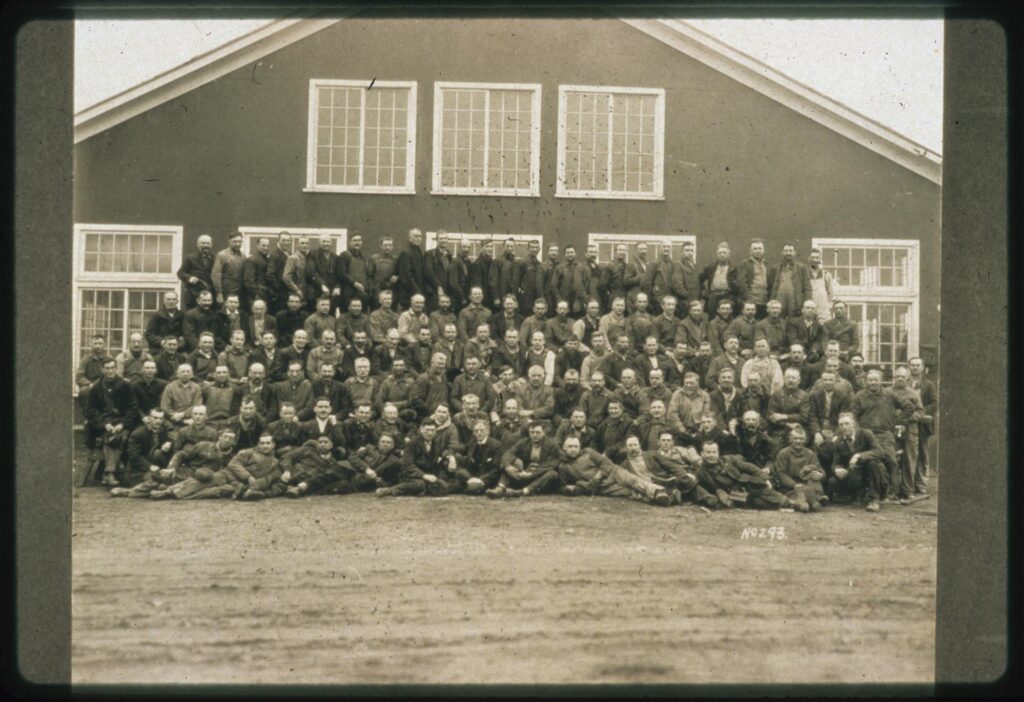
Employees of the Manitowoc Shipbuilding Company joiner shop in 1918. Image via UW Digital Collections, #BandI2.098.
The Manitowoc Shipbuilding Company (formerly known as The Manitowoc Dry Dock Company) was founded in 1902 by Charles West and Elias Gunnell and went on to dominate much of the economy and industry of Manitowoc. The Manitowoc Shipbuilding Company developed materials from steel vessels to all-steel ships for the U.S. Navy. This industry gave birth to numerous jobs for those living in Manitowoc, which further grew the economy.
By World War I, the company increased their employment to 2,500 employees working in the shipyards. 100 homes for employees were provided during this time as well, after the Manitowoc Shipbuilding Company converted an old machine shop into a dormitory. A steamer named the Chicago was also converted into a floating hotel and dining room. Removing housing problems for employees allowed the company to expand into six buildings and produce 18 ships a year. The stability of housing and employment was also very appealing to citizens of Manitowoc as they faced the economic insecurity brought about by WWI.
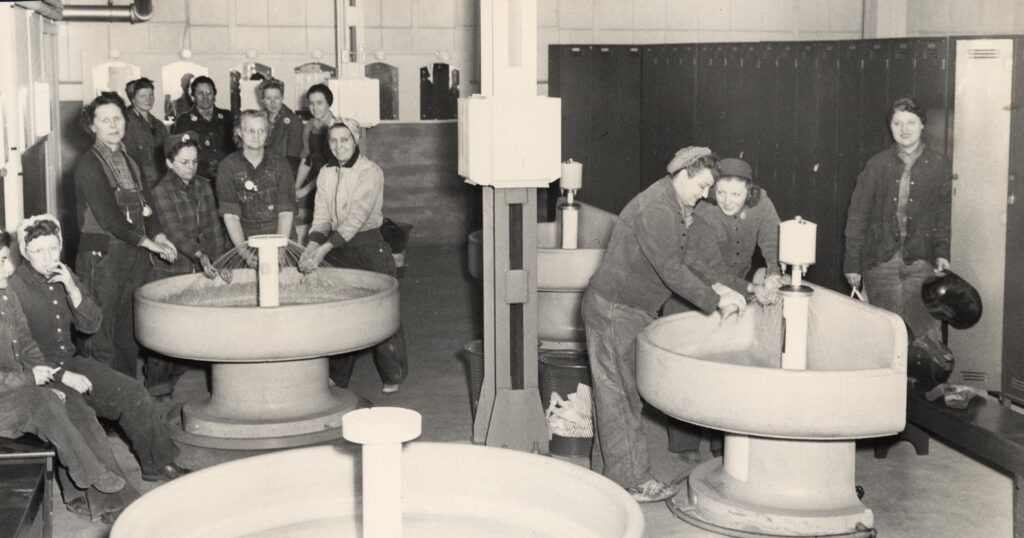
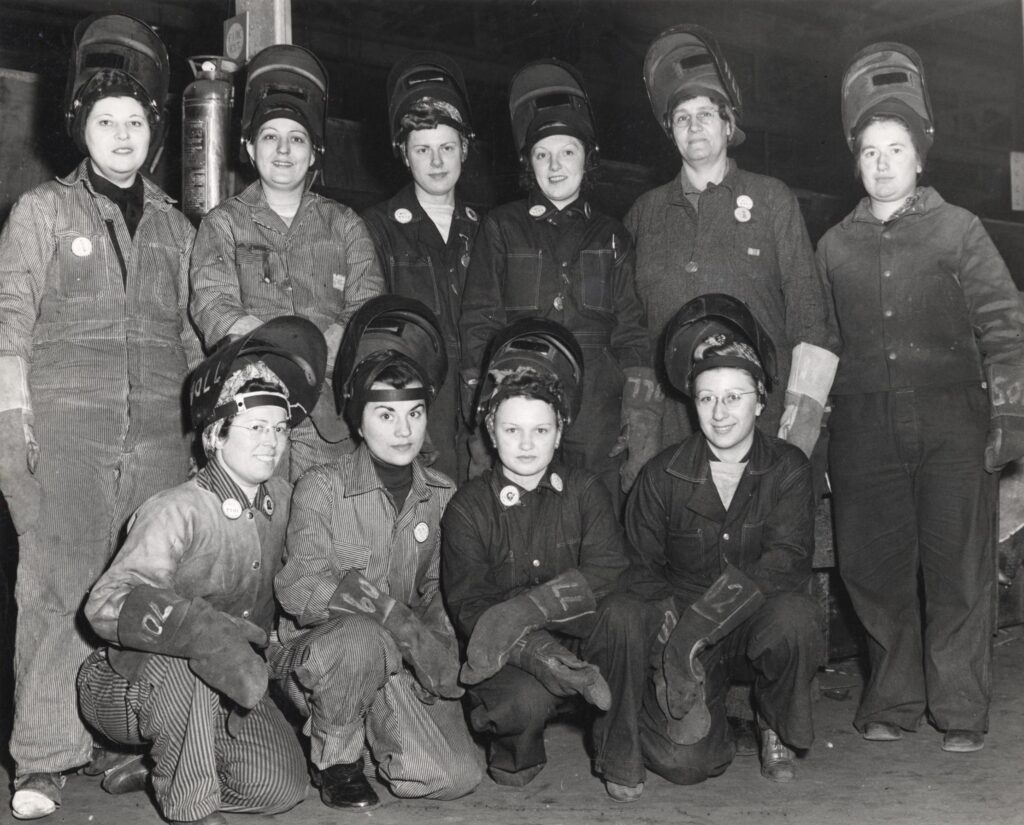
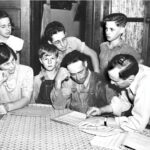
Positions in shipbuilding became highly sought after, and following the start of WWII in the 1940’s, women started working in the shipyards as more men were drafted for the war. 358 women were employed at the shipyards by 1943. While around half of these women were office workers, 177 women worked in production as welders, painters, and machinists. Shipbuilding was a major way women were brought into Manitowoc’s workforce.
Photograph showing the interior of the ladies' locker room at Manitowoc Shipbuilding Company during the 1940s when women joined the shipyards workforce in increasing numbers as men were drafted for the war. Ca. 1943. Image by Manitowoc Shipbuilding Co. Courtesy of Wisconsin Maritime Museum.
Ten women welders posing for a picture at the Manitowoc Shipbuilding Company where they worked in the submarine building program. Ca. 1942 Image by Manitowoc Shipbuilding Co. Courtesy of Wisconsin Maritime Museum.
Both the Manitowoc Shipbuilding Company and the Burger Boat Company have evolved as Manitowoc’s shipbuilding identity has transitioned with the changing industrial needs of the city. The Manitowoc Shipbuilding Company now functions as a manufacturing business called The Manitowoc Company. The Burger Boat Company currently manufactures commercial yachts. Globally, Manitowoc is recognized for its active participation in the yacht industry, exemplifying the town’s continued commitment to shipbuilding as a source of economic prosperity. The Burger Boat Company employs a large amount of the Manitowoc community and brings pride to those who live there. The transformation of maritime industries towards a more commercial market highlights the evolution of people’s wealth and financial interests over the years while also expanding the variation of maritime activities in Manitowoc.
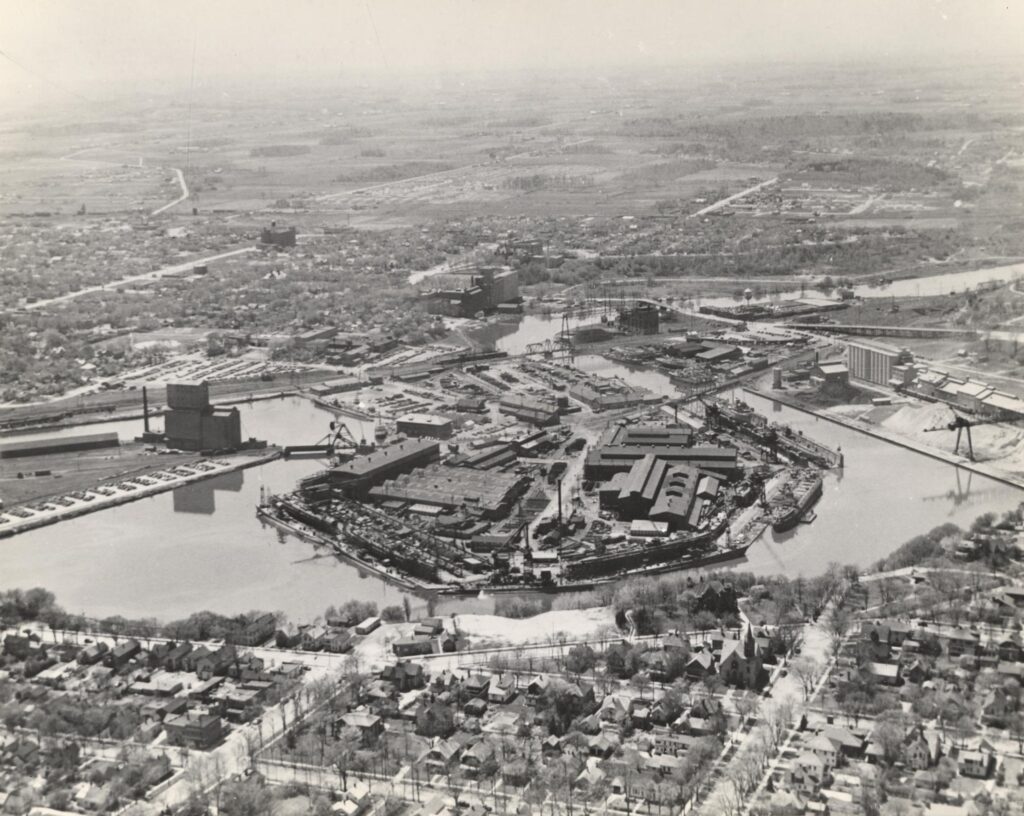
1943 aerial view of the Manitowoc Shipbuilding Company. Image via UW Digital Collections, #P95-8-1.
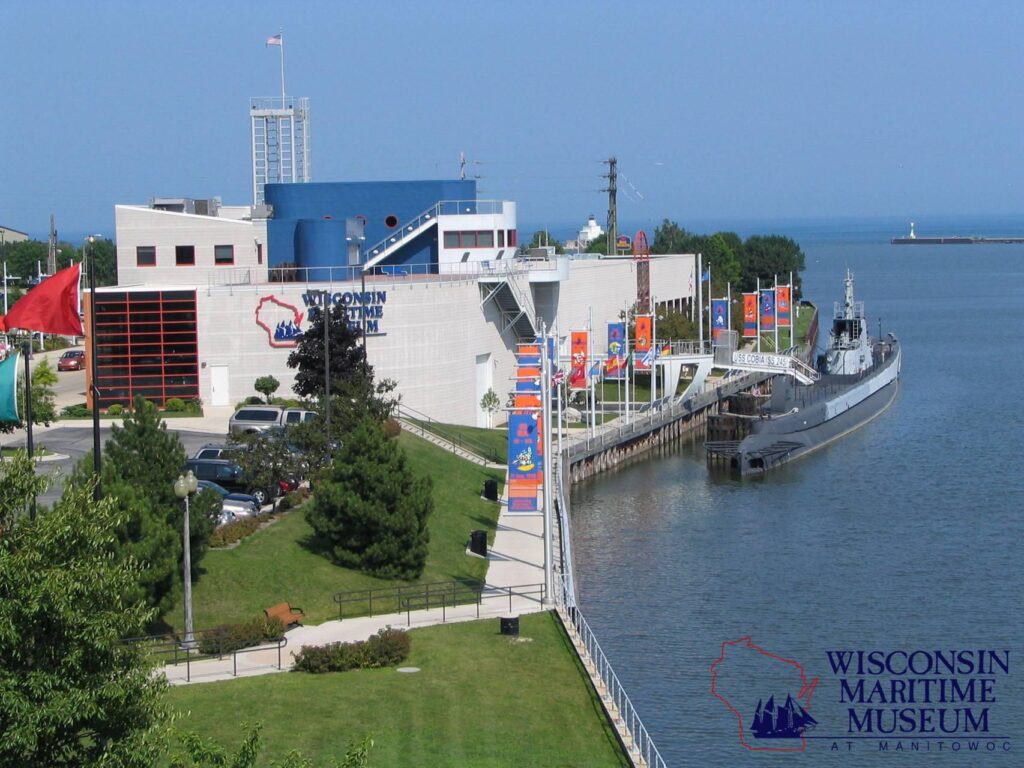
Manitowoc is home to a plethora of entertaining and educational attractions that help visitors appreciate the maritime history of the city while also contributing to the town’s tourism industry. One of the biggest, most extensive attractions is the Wisconsin Maritime Museum. This museum draws lovers of lakes and history alike to come visit a city that has its roots in shipbuilding and nautical activities. Before the museum was developed, a group of Manitowoc residents had the idea to display the U.S.S. Cobia as a submarine memorial in Manitowoc. The Manitowoc Shipbuilding Company built submarines during WWII, including the U.S.S. Cobia, which was brought back to Manitowoc to be displayed as a tribute to the submarines built for the war, further memorializing shipbuilding as a crucial characteristic of Manitowoc’s identity. However, to draw in more tourists, residents decided to add a museum.
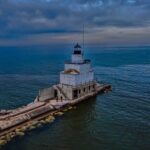
When visiting the museum, one can’t miss the breathtaking views of the Manitowoc Breakwater Lighthouse, sitting at the entrance to the harbor. Like all other lighthouses built along the Great Lakes, the Manitowoc Breakwater Lighthouse was constructed to direct navigation and warn ships of dangers that lurk ahead. Repaired and rebuilt many times over the years since 1839, the lighthouse that remains standing today was reconstructed by the government in 1918. This same lighthouse continues to greet anyone and everyone who sails into the Manitowoc harbor today, further enduring as a living piece of Manitowoc’s maritime history. Notably, the lighthouse is the only one in Wisconsin that still greets the S.S. Badger, a car ferry that sails along the Great Lakes for a fun nautical experience. Car ferries moving along Lake Michigan have been a prominent part of Manitowoc’s transportation industry for close to 80 years. The car ferries have been essential for the delivery of raw materials and equipment, positioning them closely to Manitowoc’s economy and industries. The passenger service that car ferries provide also contributes to the economy through tourism.
View of the Wisconsin Maritime Museum in Manitowoc with the USS Cobia. Image via the Wisconsin Maritime Museum.
SOURCES
Manitowoc Centennial Committee, Story of a Century, 1848-1948: Manitowoc County During Wisconsin’s First Hundred Years. Manitowoc, Wisc.: Manitowoc Centennial Committee, 1948.
Ralph G. Plumb, A History of Manitowoc County. Manitowoc, Wisconsin: Brandt Printing and Binding Co., 1904.
Michael J. VanEss, et al., Manitowoc County Maritime History. Wisconsin: Baylands Work, Inc., 1980.